The 1-Day Gorilla Trek from Kigali, Hour by Hour
Fourteen hours door to door for sixty minutes in the forest. Here is exactly how those hours are spent.
 By Eric Habimana, gorilla trekking guide since 2015
Short answer
Pickup from your Kigali hotel runs between 3:30am and 4:30am, the drive north takes about two and a half hours, and briefing at Kinigi park headquarters starts at 07:00. You are assigned one of twelve habituated families, hike one to four hours, spend exactly one hour with the gorillas, then descend for lunch and reach Kigali by evening. Tours run $260 to $360, permit separate at $1,500.
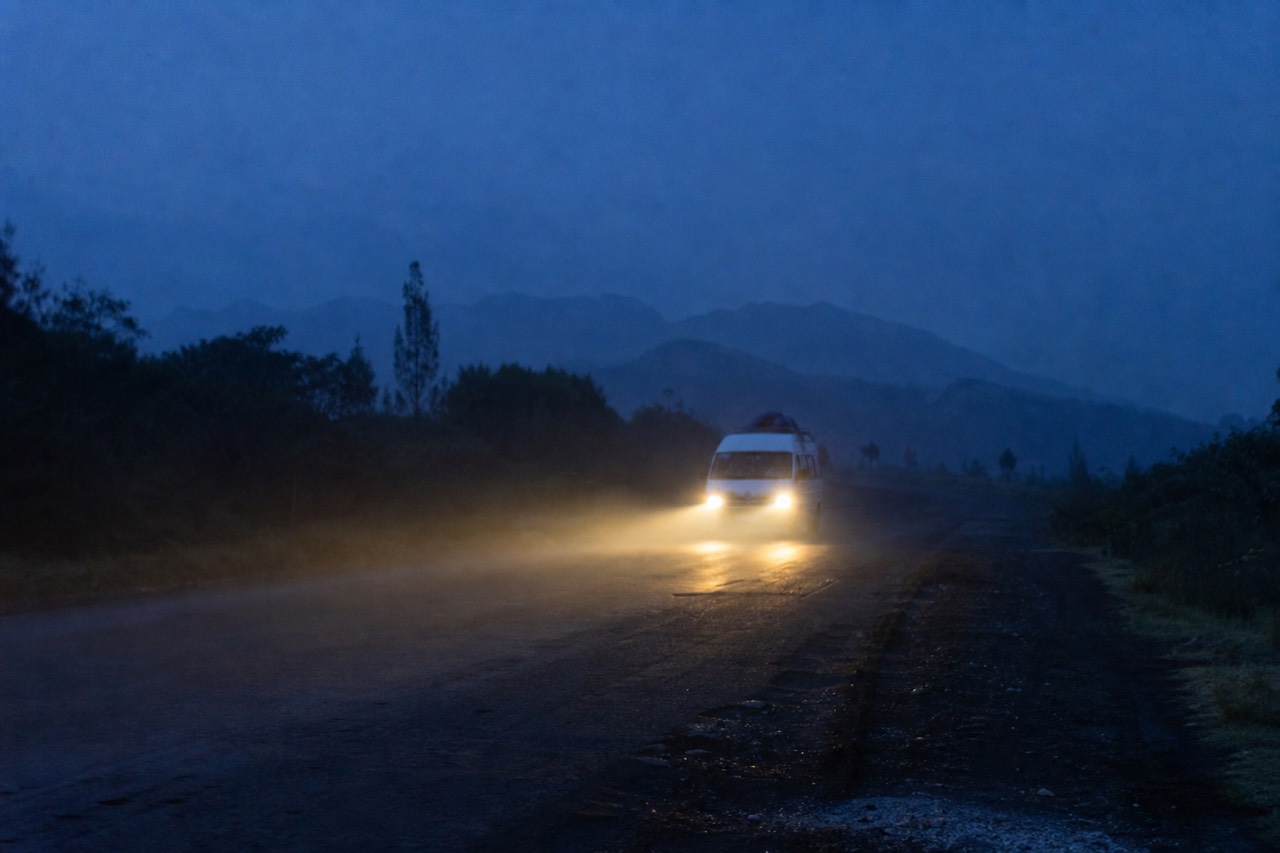
At half past three in the morning Kigali is silent except for the security guard unbolting the hotel gate. The vehicle is already idling. Nobody talks much for the first thirty minutes, and then the road starts climbing and the headlights begin picking out people walking to the fields with hoes over their shoulders, hours before sunrise, because that is when the work gets done here. By the time the sky goes grey you are somewhere above 2,000 metres with volcanoes stacked ahead in silhouette.
The day trip from Kigali is the most-booked way to see mountain gorillas in Rwanda, and it works because of one geographic accident: the capital is close enough to the park that a 07:00 briefing is reachable without an overnight stay. Everything else about the day is built around that single deadline.
Your Booking Choice
Keep the Kigali departure, forest trek and return in one private day with hotel pickup and meals arranged.
The private day trek handles the road journey and meals; its gorilla permit is a separate purchase.
What does a one-day trek from Kigali actually look like?
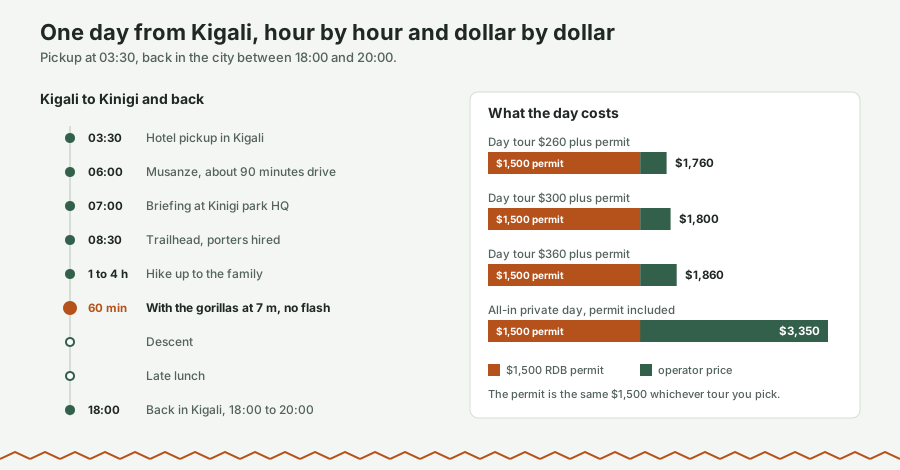
Hotel pickup between 3:30am and 4:30am, a drive of roughly two and a half hours north, briefing at Kinigi park headquarters at 07:00, family assignment, a hike of one to four hours each way, exactly sixty minutes with the gorillas, descent, late lunch, and return to Kigali in the evening. Total door to door is twelve to thirteen hours.
The shape is fixed because the park controls the shape. Briefing is at 07:00 for everyone, the hour with the gorillas is the same hour for everyone, and no operator can shift either. What operators control is the vehicle, the pickup time, whether meals are included, and what happens with the leftover afternoon.
That is why the price spread between the cheapest and the most expensive day trek is only $100 while the permit sitting on top of all of them is $1,500. You are choosing between three versions of the same regulated day.
| Time | What happens | Where |
|---|---|---|
| 3:30 to 4:30am | Hotel pickup, headcount, passports checked | Kigali |
| 4:30 to 6:00am | Drive north, mostly dark, one stop | RN4 toward Musanze |
| About 6:00am | Musanze reached, roughly 90 minutes from Kigali | Musanze |
| 6:30 to 7:00am | Final leg to the park headquarters | Kinigi |
| 07:00 | Official briefing, family assignment, rules | Kinigi park HQ |
| 7:45 to 8:30am | Transfer to the trailhead, porters hired | Park boundary |
| 8:30am to midday | Hike to the family, commonly 1 to 4 hours | Inside the park |
| Your hour | Exactly 60 minutes at 7 metres, no flash | Wherever the family is |
| Midday to 3:00pm | Descent, certificates, porters paid | Trailhead |
| 2:00 to 4:00pm | Late lunch, optional add-on | Kinigi or Musanze |
| 6:00 to 8:00pm | Return to Kigali | Kigali |
Why does pickup happen at 3:30am?
Because the 07:00 briefing at Kinigi is non-negotiable and the drive from Kigali takes about two and a half hours. Working backwards from 07:00 with a buffer for the last unsealed kilometres, collecting multiple hotels, and a stop, the arithmetic lands between 3:30am and 4:30am. Missing the briefing means forfeiting a $1,500 permit.
The Rwanda Development Board states the reporting time plainly on its official gorilla tracking page: 07:00 at Kinigi. Trackers have been out since first light locating each family, rangers allocate the eight-person groups on the spot, and the whole system moves at once. There is no second briefing at 08:00 for late arrivals.
Operators build in different amounts of slack. The cheapest day trip starts pickups at 4:30am, which is a tighter run and works because it is often a smaller vehicle with fewer hotel stops. The private day product lists twelve hours and a scheduled 4:30am departure, which is the more forgiving structure if you are staying somewhere awkward in Kigali or travelling as a group.
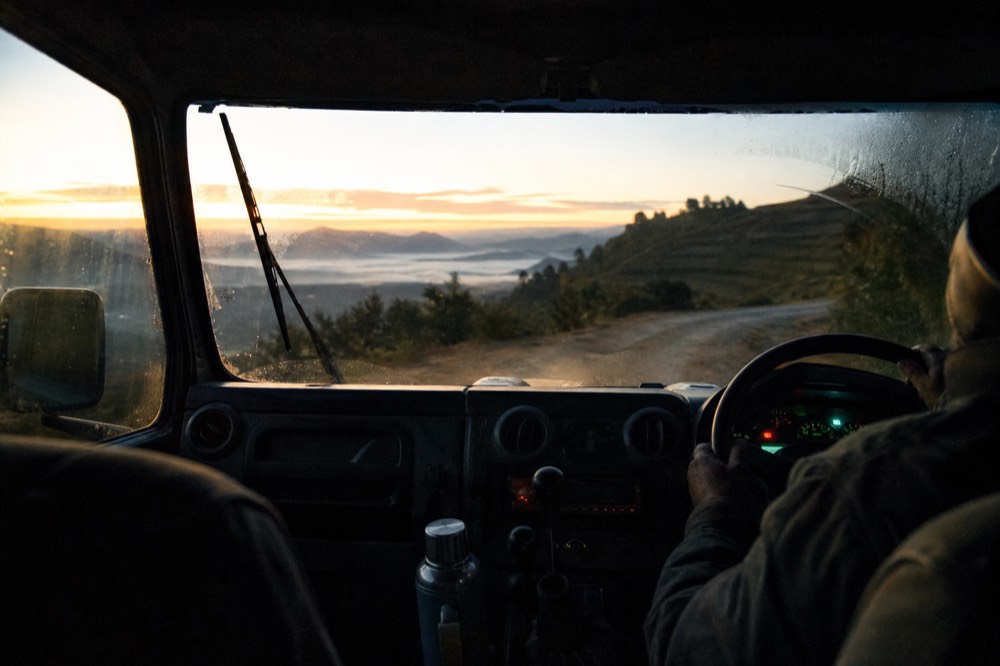
One detail catches people out. The forfeit is total. Permits are issued against your passport, they are not transferable to another date, and no operator can conjure a replacement from the eighty places allocated that morning. That is the actual reason the pickup is brutal: the alarm is cheap insurance on a $1,500 asset.
What happens at the 7:00 briefing in Kinigi?
Rangers split arriving visitors into groups of eight, one group per habituated family, matching fitness and preference to the expected walking distance. You get the rules, a short cultural performance on some mornings, and the chance to hire a porter. Twelve families are open to visitors, so eighty people trek per day, maximum.
The briefing is the most underrated part of the day and the part most write-ups skip. It is where the difficulty of your particular trek is decided, and it is genuinely negotiable. If you tell the head ranger you have a bad knee or arrived from Europe yesterday, you get put on a family that is feeding closer to the boundary. If you say you want the long walk, you will get it.
The rules are read out because they are enforced, not because they are decorative. Seven metres minimum distance. One hour maximum. No flash photography. Do not trek if you have a cold, flu or anything contagious, and expect to be turned away if you are visibly unwell, because a human respiratory virus in a gorilla family is a conservation event rather than an inconvenience. Keep your voice low, no sudden movements, no spitting, no litter. Rwanda's tourism board sets out the same conditions on its gorilla tracking overview, and the health rule in particular is worth reading against the CDC's Rwanda travel health page before you fly.
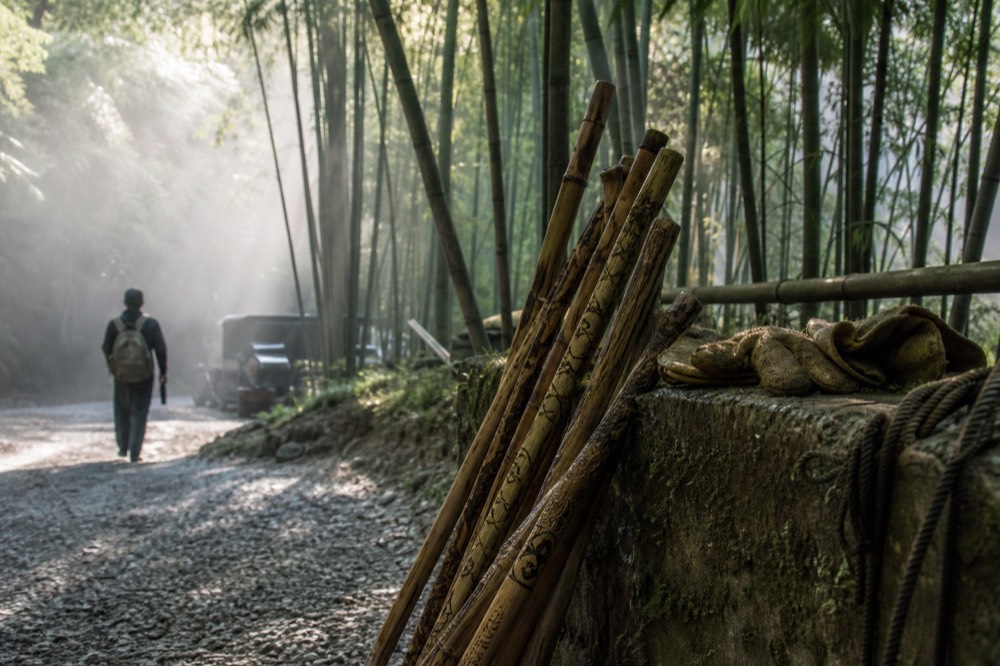
Coffee appears. So do the porters, who wait at the edge of the car park and will carry your daypack for a modest fee that goes into the community around the park. Hiring one is close to the most efficient charitable act available on the day, and it also means your hands are free on the steep sections.
| Briefing element | Detail | Why it matters |
|---|---|---|
| Reporting time | 07:00 at Kinigi park HQ | Missed briefing forfeits the permit |
| Group size | Maximum 8 visitors per family | Fixed by the park, never exceeded |
| Families open to visitors | 10 fully habituated | 96 permits per day in total |
| Family allocation | By ranger, matched to fitness | Speak up here, it changes your day |
| Minimum age check | 15 years, no exceptions | Passport checked against the permit |
| Health screening | Turned away if visibly sick | Protects the gorillas, not you |
| Porter hire | Optional, arranged at the trailhead | Community income and a free pair of hands |
How long is the hike, and how hard?
Commonly one to four hours each way, on volcanic ground between roughly 2,500 and 4,000 metres. The distance depends entirely on where your assigned family slept, which nobody knows until the trackers radio in. Altitude is the real difficulty, not the gradient. Fit people from sea level struggle more than they expect.
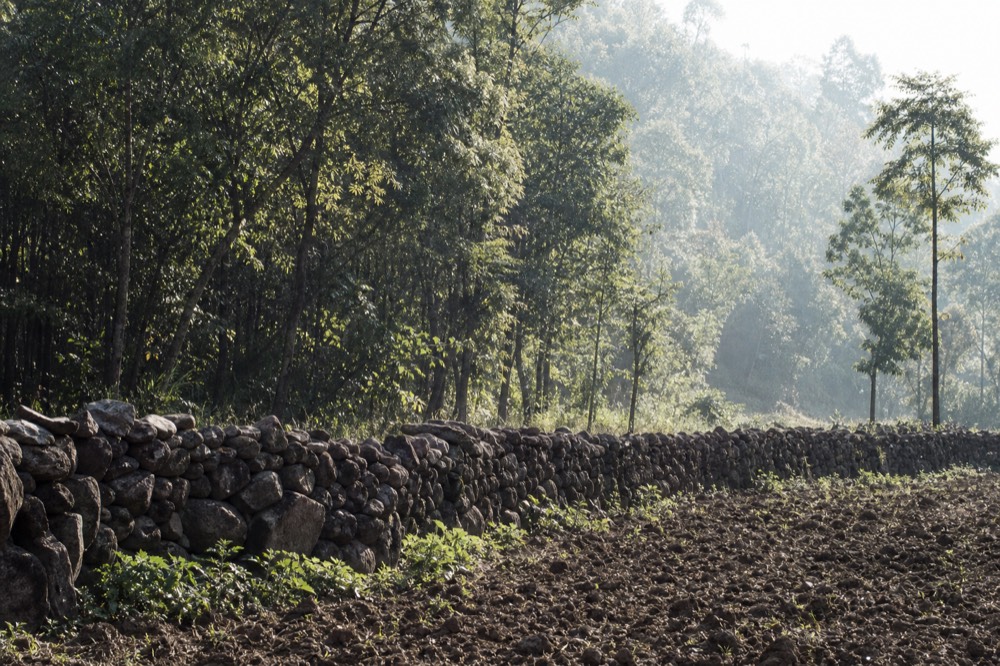
You start by walking through farmland. Potato and pyrethrum fields run right up to the stone buffalo wall that marks the park boundary, and the first twenty minutes are flat and deceptively easy. Then the wall is behind you and the ground changes: soft volcanic soil, nettles that sting through thin fabric, and bamboo so dense that the trackers cut through it.
The variability is the honest headline. Two people can pay the same $1,500 on the same morning and one walks forty minutes while the other walks three hours uphill. Neither outcome is a failure or a bonus, and there is no way to buy the short version. Our honest fitness guide goes into the training that actually helps, which is stair work and hills rather than distance running.
| Trek length | Roughly how it feels | Who tends to get it |
|---|---|---|
| Under 1 hour each way | Farmland, short forest push, minimal climbing | Boundary-feeding families, requested by less mobile visitors |
| 1 to 2 hours | Steady climb through bamboo, one or two rest stops | The most common outcome |
| 2 to 3 hours | Sustained uphill, altitude noticeable, muddy sections | Families that moved overnight |
| 3 to 4 hours plus | Serious hill day, porters strongly advised | High-feeding families, requested by strong walkers |
What is the hour with the gorillas really like?
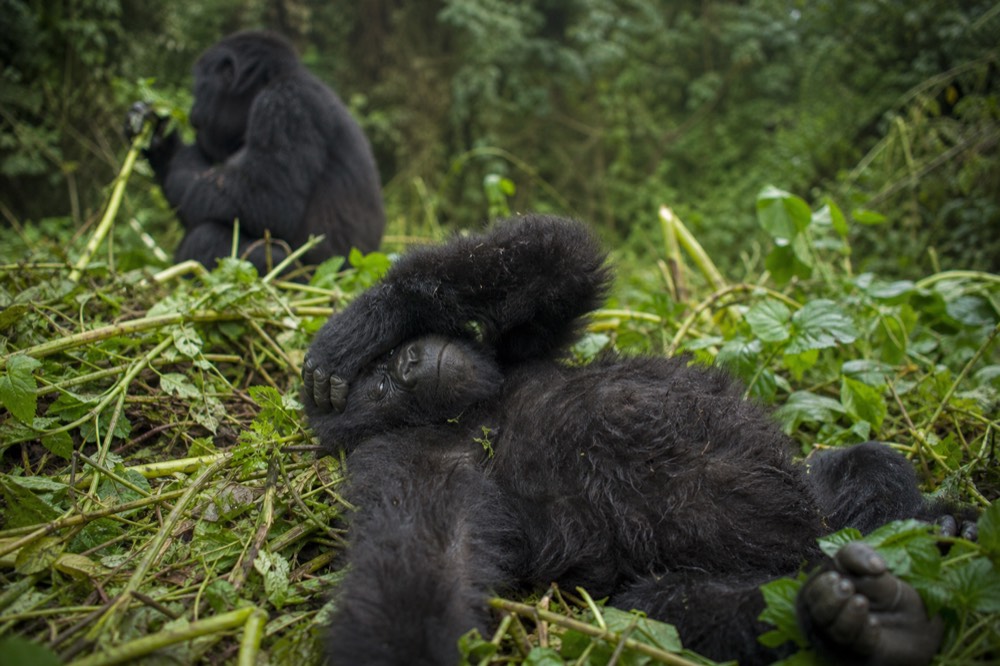
Trackers stop, you leave the daypacks and walking sticks behind, and the group moves the last stretch quietly. Then a family of mountain gorillas is simply there, feeding, grooming, wrestling. You get sixty minutes at seven metres with no flash. The hour goes faster than any hour you have spent.
The seven-metre rule is a rule for you, not for them. Gorillas habituated over years to human presence have no particular reason to respect a distance line, and a juvenile crossing the path within touching distance is an ordinary occurrence. The correct response is to back away slowly and let the ranger manage it. Do not reach out, do not crouch to their level to get the shot, and do not try to hold eye contact.
Photography without flash in dim forest is the technical problem of the day. Bamboo cuts the light hard, and gorillas are dark subjects against dark leaves. Most people come home with better memories than photographs, which is exactly why the reviewers who rate these treks 5.0 tend to write about the sound rather than the pictures: the chest-deep grunts, the tearing of bamboo, and the total absence of anything mechanical.
The ranger will call time. It is not approximate. When the hour is up you turn around and walk back down, and a surprising number of people describe the descent as the emotional part rather than the ascent.
What happens after you come down?
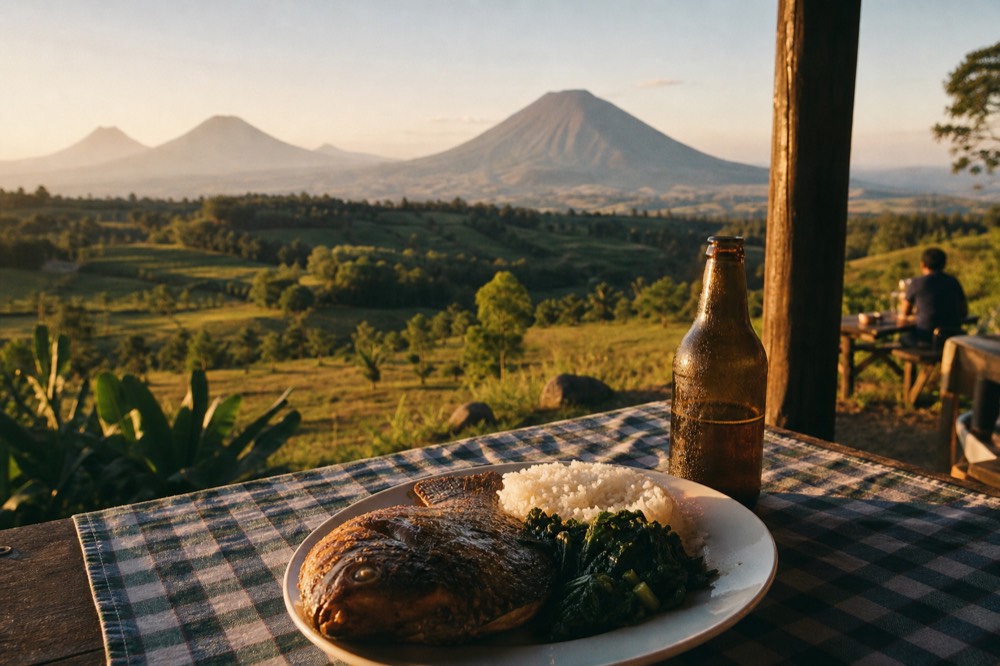
You receive a signed trekking certificate at the trailhead, pay and tip your porter, and change out of wet boots. Lunch follows in Kinigi or Musanze, usually between 2:00pm and 4:00pm. Some tours attach an afternoon add-on. Otherwise the drive back to Kigali gets you in between 6:00pm and 8:00pm.
The certificate is a small piece of ceremony that people mock in advance and keep afterwards. It carries the family name, which is the one souvenir with information on it, and it is handed over by the ranger who walked with you.
The afternoon is the genuine difference between the three products. The cheapest option drives you back. The mid-priced trek offers a private vehicle and a choice involving the Dian Fossey Ellen campus or Gorilla Guardians cultural village; it is not the separate Fossey tomb hike. The flagship trek runs twelve hours with meals included, which in practice means the lunch stop is unhurried rather than a fuel-station sandwich.
Two things affect how you feel on the drive home. The first is that you have been awake since 3:00am and have climbed at altitude. The second is that the return leg is the same two and a half hours, and it happens in the dark again. Groups that book the multi-day version specifically to avoid this second drive are not being precious about it.
Which of the three day treks should you book?
Take the $260 option if price is the deciding factor and you are comfortable with a 4:30am start. Take the $300 trek if you want a private 4x4 and an optional visit to the Dian Fossey Ellen campus or Gorilla Guardians village. Take the $360 flagship if you want the longest window, hotel pickup and meals handled. None includes the $1,500 permit.
The gap between them is small enough that this is a comfort decision rather than a budget one, since the permit dwarfs all three. What actually separates them:
The $260 day trip carries a top-rated badge and a 4.9 rating across 37 reviews, runs private or shared, and starts pickups at 4:30am. It is the lean version and it does the job.
The $300 trek adds a private 4x4 with Wi-Fi, a badge of excellence, a six-to-ten-hour window, and the choice between the Dian Fossey Ellen campus and Gorilla Guardians village. If the trek itself finishes early, that add-on is the difference between a full day and a long wait.
The $360 flagship is the most-reviewed of the three, at 4.9 across 82 reviews , operated by Universal Ventures. Twelve hours, Kigali hotel pickup, meals included. It is the option that assumes nothing about you knowing the drill.
| From $260 | From $300 | From $360 | |
|---|---|---|---|
| Rating | 4.9 across 37 reviews | 5.0 across 28 reviews | 4.9 across 82 reviews |
| Duration | Full day | 6 to 10 hours | 12 hours |
| Pickup | 4:30am, Kigali | Kigali | Kigali hotel pickup |
| Vehicle | Private or shared | Private 4x4 with Wi-Fi | Private |
| Meals | Lunch included | Lunch included | Included |
| Afternoon add-on | None | Dian Fossey Ellen campus or Gorilla Guardians village | None |
| Permit included | No, $1,500 separately | No, $1,500 separately | No, $1,500 separately |
| Cancellation | Free up to 24 hours | Free up to 24 hours | Free up to 24 hours |
What is the real total once you add the permit?
Between $1,760 and $1,860 per person for any of the three day treks plus the $1,500 permit. The only way to pay one price for everything is the all-in private day at $3,350, which includes the permit and park fees but is non-refundable. The 3-day package including a permit runs $3,746.
This is the arithmetic that decides how people book, and it is worth laying out flat rather than hiding in prose. If you are still weighing the whole idea rather than the format, the honest worth-it argument makes the case both ways with the review record. The permit is 96 to 85 percent of the day-trek total. Every decision about vehicles, meals and Wi-Fi is happening inside the remaining 15 percent.
| Booking route | Tour | Permit | Real total | Cancellation |
|---|---|---|---|---|
| Day trip, buy your own permit | from $260 | $1,500 | $1,760 | Tour free to 24h, permit not refundable |
| Trek plus Fossey or Guardians | from $300 | $1,500 | $1,800 | Tour free to 24h, permit not refundable |
| Flagship 12-hour day trip | from $360 | $1,500 | $1,860 | Tour free to 24h, permit not refundable |
| All-in private day | from $3,350 | Included | $3,350 | Non-refundable |
| 3-day safari with lodges | from $3,746 | Included | $3,746 | Non-refundable |
The all-in day bundles the permit and ground arrangements in one booking. The operator still needs to confirm the requested trekking date; a listed tour does not guarantee permit availability. Whether that is worth roughly $1,500 over the do-it-yourself route depends on how much you value not managing it. Travelers who want that convenience wrapped in a five-star bed will find the full picture in the luxury lodges and private treks guide. The permits guide explains how the self-booked route actually works, portal and all, and you can compare every bookable trek against these totals in one place.
Which add-ons are worth the extra hours?
The Dian Fossey tomb hike is a separate trekking activity, not the Ellen campus stop offered on the gorilla-day listing. The Gorilla Guardians cultural village is flat, short and family friendly. Golden monkey trekking is a separate activity and permit; the flexible day listing offers a choice of primate rather than both on one morning.
The memorial hike is the one people romanticise and then underestimate. The tomb hike is a separate mountain outing. Plan a separate day and confirm its fitness requirements rather than treating it as the campus stop on a gorilla day trip. The story of what happened to Dian Fossey is worth reading before you go, because the site means very little without it.
Gorilla Guardians is the softer option: a community village where former poachers now work in tourism, with performances and craft demonstrations. It is short, it is genuinely worth the money as community income, and it does not require another climb.
Golden monkeys are the strongest add-on for wildlife-first travellers, and the only one that involves a second habituated primate. They live in the bamboo zone of the same park, the walk is easier, and the golden-monkey option has its permit charged separately from the tour price. Check the selected option’s permit charge before comparing totals.
| Add-on | Extra time | Difficulty | Cost note |
|---|---|---|---|
| Dian Fossey tomb hike | Separate trekking day | Mountain walking | Separate product; not included in the gorilla-day campus option |
| Gorilla Guardians village | About 1 to 2 hours | Easy, flat | Included as an option on the $300 trek |
| Golden monkey trek | A separate morning | Confirm activity demands | Tour and golden monkey permit charged separately |
| Musanze caves | About 2 hours | Easy to moderate | Booked locally, separate fee |
Who should not book a day trip from Kigali?
Travellers wanting to avoid two long drives on trek day can consider a multi-day trip sleeping near the park. Extra nights do not remove the minimum-age rule or the trek’s physical demands.
The jet lag case is the most common and the least discussed. Arriving from Europe or North America, sleeping four hours, then climbing at 3,000 metres before dawn is a genuinely poor plan, and people who do it usually describe the trek as harder than it needed to be. A night in Musanze or Kinigi removes the drive and gives you a 6:00am start instead of a 3:30am one.
The age rule has no flexibility at all. Fifteen years is the minimum stated by the Rwanda Development Board, and it is checked against the passport that the permit was issued against. Fourteen-year-olds do not trek, no matter how capable they are.
For travellers whose concern is the early drive or overnight rest, the 2-day and 3-day options solve the problem directly, and the permit-included and multi-day section lists what is bookable. For everyone else, the day trip remains the most efficient way to see mountain gorillas anywhere on earth.
Frequently asked questions
What time does the gorilla trek from Kigali start?
Hotel pickup runs between 3:30am and 4:30am depending on the operator and where you are staying. The drive north takes about two and a half hours, and the compulsory briefing at Kinigi park headquarters begins at 07:00. Arriving after the briefing means losing the permit, so operators build in a buffer rather than cutting it fine.
Can you do gorilla trekking in Rwanda as a day trip?
Yes, and it is the most common way people do it. Volcanoes National Park sits about two and a half hours from Kigali on a sealed road, which makes the 07:00 briefing reachable from the capital. Day treks run from $260 to $360 and take twelve to thirteen hours door to door. The $1,500 permit is bought separately.
How long do you actually spend with the gorillas?
Exactly one hour, timed by the ranger, at a minimum distance of seven metres with no flash photography. The rule is set by the Rwanda Development Board and applied identically to every visitor and every tour price. The hike to reach the family commonly takes one to four hours each way, and that portion varies enormously.
What happens if I miss the 07:00 briefing?
You forfeit the permit. It is issued against your passport for a specific date, it is not transferable, and the eighty daily places are already allocated by the time briefing starts. No refund is available from the park. That single risk is the reason a 3:30am pickup exists for a park that is only two and a half hours away.
Is lunch included on the day trip?
It depends on the product. The flagship twelve-hour trek from Kigali includes meals. The Vista departure includes lunch, and the Afri Safaris departure includes lunch and drinks. Check your selected option before booking. Either way, carry your own snacks and at least two litres of water for the hike itself, because nothing is available on the trail.
Do I need a porter?
Not officially, but hiring one is a good idea on almost every trek. Porters wait at the trailhead, carry your daypack, and give a hand on steep and muddy sections for a modest fee that stays in the communities bordering the park. On a three-hour uphill trek at altitude, having your hands free matters more than most first-timers expect.
Choose The Experience That Fits Your Trip
General starting point; dates, pickup and passenger acceptance still need confirmation.
Choose your day: separate permit or bundled permit · alternatives & optional controls
- Kigali Gorilla Tracking Day — 1 day. Kigali pickup, driver-guide, lunch and water; gorilla permit extra. Gorilla permit excluded. English listed. Ages 15+. Kigali city/hotel or Kigali airport; returns Kigali.
- Permit-Included Rwanda Gorilla Day — 13 hours. Gorilla permit and lunch in one booking; Kigali or Ruhengeri pickup. Gorilla Permit Fee included. English listed. Ages 15+, up to 100. Booked hotel in Kigali or Ruhengeri; confirm your return arrangements with the operator.
Private Gorilla Trek From Kigali
Have your trek date in mind? Check the private day’s pickup and booking options before arranging the rest of your Kigali stay.
12 hours. Private transport, driver-guide and meals around the park trek. Gorilla permit purchased separately; operator offers assistance. English listed. Ages 15+, up to 85. Pickup and drop-off anywhere in Kigali.
Check dates & final price on Viator