2-Day and 3-Day Gorilla Trekking Packages in Rwanda (2026)
One extra night removes the worst hour of the day trip and buys back the altitude your body needs.
 By Eric Habimana, gorilla trekking guide since 2015
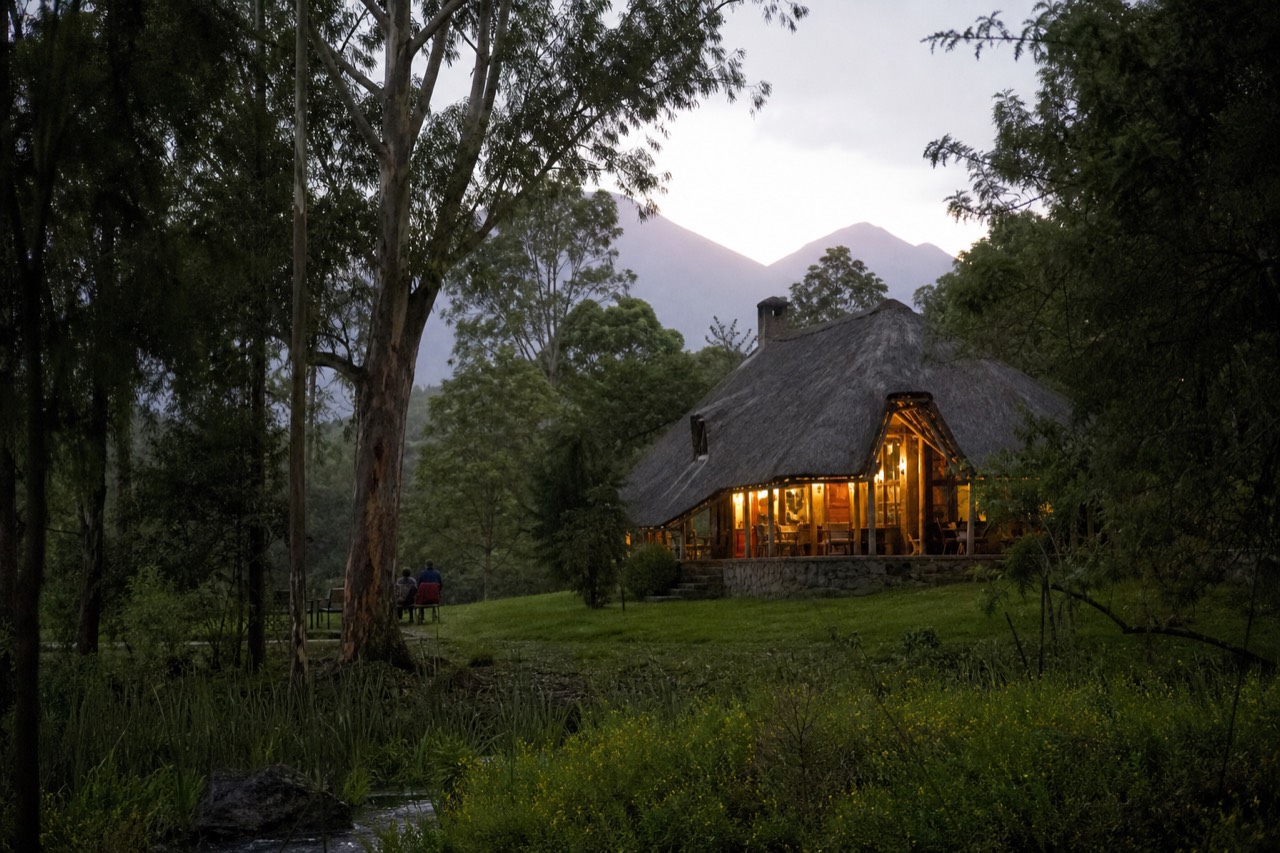
Short answer
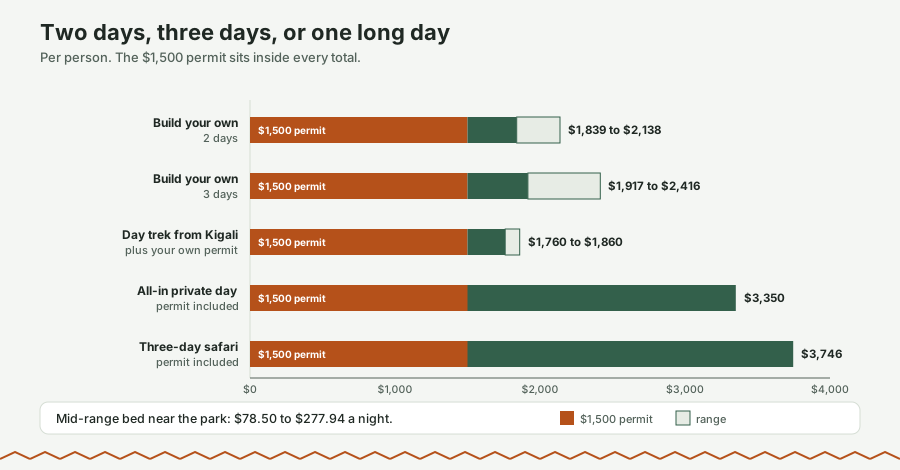
A three-day package with the permit inside runs from $3,746 and covers lodges, meals, a private 4x4 and one $1,500 permit per person. Building the same trip yourself costs roughly $1,917 to $2,416, so the package quote combines accommodation, transport, meals and permit arrangements. A two-day trip can also be assembled independently: day trek plus one Musanze night lands between $1,839 and $2,138.
The argument for a multi-day trip is not luxury. It is a bed within twenty minutes of the park gate, which turns a 3:30am pickup into a 6:00am one and gives your body a night at 1,800 metres before you climb to 3,000. Anyone who has landed at Kigali at eleven at night, slept badly, and been collected four and a half hours later understands the value of that immediately, usually about two hours into the ascent.
What confuses people is the pricing. Multi-day packages here jump from roughly $2,000 of self-assembled parts to $3,746 for the bookable version, and the reason is not markup on the same product. It is the lodge tier and the permit sitting inside one transaction instead of two.
Your Booking Choice
Spread the trip over three days with accommodation, meals, private transport and one gorilla permit included.
The three-day safari bundles the stay and trek; check the named accommodation option and final quote before comparing with a DIY trip.
Why book more than one day for a one-hour experience?
Three reasons, in order of how much they matter: you sleep near the trailhead instead of driving two and a half hours in the dark, you get a night to adjust to altitude before trekking at 2,500 to 4,000 metres, and you keep a day in reserve if weather or a long tracking day wrecks your schedule.
The day trip works, and it works well for people who have been in East Africa for a week already. It works badly for people who arrive on a long-haul flight the previous evening. Volcanoes National Park is high, the ground is steep, and the difference between trekking on four hours of broken sleep and trekking on eight is not subtle.
There is a scheduling argument too. A day trip is a single point of failure: one date, one permit, one morning. A three-day itinerary spreads travel around the trekking morning. It does not guarantee that a dated permit can be moved after a delay.
| Trip shape | Wake-up on trek day | Permit handled by | Real total per person | Cancellation |
|---|---|---|---|---|
| Day trip from Kigali | 3:00 to 4:00am | You, via the government portal | $1,760 to $1,860 | Tour free to 24h, permit not refundable |
| All-in private day | Early, but pickup from Kigali or Ruhengeri | The operator | from $3,350 | Non-refundable |
| Build-your-own 2 days | About 6:00am | You | $1,839 to $2,138 | Depends on each booking |
| Build-your-own 3 days | About 6:00am | You | $1,917 to $2,416 | Depends on each booking |
| 3-day safari package | About 6:00am | The operator | from $3,746 | Non-refundable |
What does the 3-day package actually include?
Lodge accommodation, all meals, a private 4x4 with driver for the full three days, and one gorilla permit per person at the $1,500 government rate. It runs from $3,746, is operated by Nkuringo Safaris, holds a 4.7 rating across 3 reviews, and is non-refundable once confirmed.
The permit inclusion is the headline, because it changes what you are buying. On the separate-permit day treks, the tour price and the permit are two separate purchases with two separate cancellation policies and two separate risks of the date being unavailable. Here they arrive as one line.
The vehicle matters more on a three-day trip than on a one-day one. You are not just being driven to Kinigi and back, you have transport for the whole stay, Optional activities outside the stated itinerary need to be arranged and priced separately.
Meals being included is the small mercy that people appreciate on day two. Restaurants near the park close early, distances are longer than they look on a map after dark, and the last thing anyone wants after a four-hour trek is to negotiate dinner.
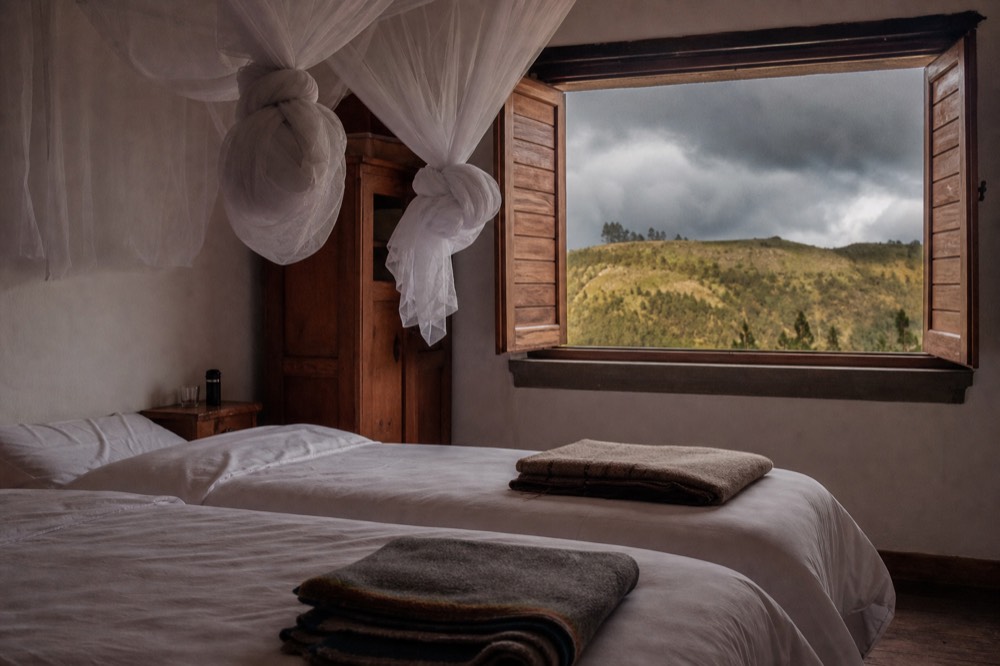
| Included | In the 3-day package | In a day trek from Kigali |
|---|---|---|
| Gorilla permit at $1,500 | Yes, one per person | No, bought separately |
| Accommodation | Lodge, 2 nights | None |
| Meals | All | Lunch also included on the Vista and Afri Safaris day trips |
| Private 4x4 with driver | 3 days | Day of the trek only |
| Park transfers | Yes | Yes |
| Pre-dawn Kigali departure | Not needed on trek day | Yes, 3:30 to 4:30am |
| Additional itinerary days | Yes; permit changes are not guaranteed | No |
| Cancellation | Non-refundable | Tour free to 24h, permit not refundable |
Is the 3-day package cheaper than building it yourself?
No. Assembling the same three days costs roughly $1,917 to $2,416 per person: a $1,500 permit, a $260 to $360 day trek, and two nights in the Musanze and Kinigi area at $78.50 to $277.94 a night. The $3,746 package sits $1,330 to $1,829 above that, and the gap buys a higher lodge tier, all meals, three days of private vehicle, and someone else securing the permit.
Here is the arithmetic laid out flat, because this is the number people actually want and almost nobody publishes.
| Line item | Cheapest build | Higher-end build |
|---|---|---|
| Gorilla permit, foreign non-resident | $1,500 | $1,500 |
| Day trek from Kigali or Musanze | $260 | $360 |
| Night 1, Musanze or Kinigi area | $78.50 | $277.94 |
| Night 2, Musanze or Kinigi area | $78.50 | $277.94 |
| Three-day self-assembled total | $1,917 | $2,415.88 |
| Bookable 3-day package | $3,746 | $3,746 |
| Difference | $1,829 | $1,330 |
Whether that difference is money well spent depends on one question: what does the package's lodge tier actually cost on its own? The mid-range band above tops out around $278 a night. The named luxury properties near the park start far higher, with published 2026 rates running $2,720 to $3,630 per person per night at Singita Kwitonda and $2,869 to $3,795 at Wilderness Bisate. A package that includes lodging somewhere between those poles is not being priced dishonestly, it is simply not a budget product.
The second half of the answer is risk transfer. Buying your own permit means applying through the Rwanda Development Board portal, paying a government body directly, and discovering only then whether your date survives. Eighty permits exist per day. The package removes that step, and for travellers booking three months out in high season, that is worth real money.
How do you build a 2-day trip yourself?
One way to make a two-day trip is to assemble it yourself: a day trek at $260 to $360, one night in Musanze or Kinigi at $78.50 to $277.94, and your own $1,500 permit. Total is $1,839 to $2,138. The night goes before the trek, not after.
The bookable products cluster at one day or three, and a two-day stay can also be assembled independently. That is not a problem, because the two-day version is mostly a day trek with the drive moved to the previous afternoon.
The sequence that works: travel from Kigali to Musanze in the early afternoon of day one, check in, eat properly, sleep, get collected at around 6:00am for the 07:00 briefing, trek, come down, then either drive back to Kigali that evening or add a second night. Confirm a near-park pickup before booking. The permit-included Katona day explicitly lists Ruhengeri pickup; the lower-priced Kigali departures do not establish that pickup in their verified terms.
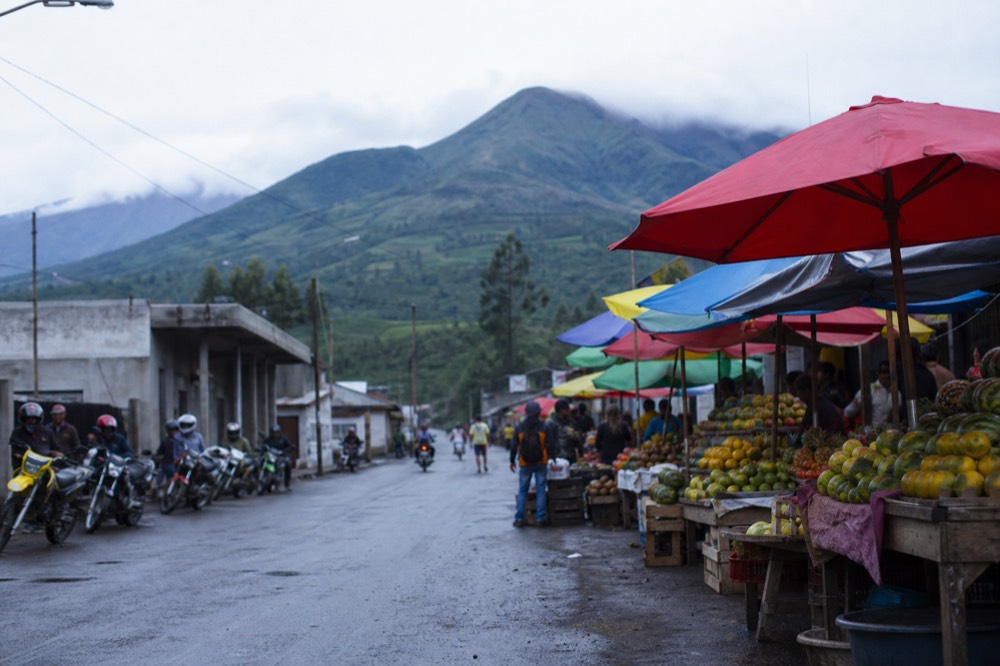
| Component | Cheapest | Higher-end | Notes |
|---|---|---|---|
| Gorilla permit | $1,500 | $1,500 | Fixed by the government, no discounts for foreign non-residents |
| Day trek | $260 | $360 | Ask for Musanze or Ruhengeri pickup instead of Kigali |
| One night near the park | $78.50 | $277.94 | Mid-range band for the Musanze and Kinigi area |
| Two-day self-assembled total | $1,838.50 | $2,137.94 | Add transfers if you are not on a tour vehicle both ways |
The saving against the three-day package is large, roughly $1,600 to $1,900, and the thing you give up is the second night, the meals, and having someone else buy the permit. For an independent traveller comfortable with a government booking portal, that is a straightforward trade.
What do beds actually cost near the park?
Mid-range guesthouses and small lodges in the Musanze and Kinigi area run roughly $78.50 to $277.94 a night. The named luxury properties are an entirely different market: 2026 published rates put Singita Kwitonda at $2,720 to $3,630 per person per night and Wilderness Bisate at $2,869 to $3,795, both fully inclusive.
That gap, from under eighty dollars to nearly four thousand, is the widest of any line item on a Rwandan gorilla trip, and it is what makes package prices look arbitrary until you know which tier is inside.
| Tier | Nightly rate | Basis | What it typically covers |
|---|---|---|---|
| Mid-range Musanze and Kinigi | $78.50 to $277.94 | Per night | Room, sometimes breakfast |
| Singita Kwitonda, shoulder | $2,720 | Per person sharing, 1 Nov to 14 Dec 2026 | Full board, all meals and beverages |
| Singita Kwitonda, peak | $3,630 | Per person sharing, 1 Jun to 31 Oct 2026 | Full board, all meals and beverages |
| Wilderness Bisate, shoulder | $2,869 | Per person, 1 Nov to 15 Dec 2026 | Fully inclusive, meals, local drinks, laundry, lodge activities |
| Wilderness Bisate, peak | $3,795 | Per person, 1 Jul to 31 Oct 2026 | Fully inclusive, meals, local drinks, laundry, lodge activities |
Two things follow from this table. First, a single night at the top tier costs more than a permit, which reframes the entire budget. Second, the mid-range band is genuinely good value near a park whose entry ticket is $1,500, and plenty of people trekking on a $2,000 budget stay in exactly that band without feeling short-changed. The luxury guide covers what the top tier actually buys, including helicopter transfers.
Location matters as much as price inside that band. A room in Musanze town is cheaper, better connected for restaurants and shops, and roughly forty minutes from the park gate. A room out at Kinigi is quieter, closer to the briefing, and often more expensive for less comfort. On trek day, twenty minutes of extra sleep beats a nicer bathroom, so if the price difference is small, take the one nearer the gate.
The other thing worth checking before booking any bed near the park is whether breakfast can be served before 6:00am. Plenty of guesthouses in this band open the kitchen at seven, which is useless when your briefing is at seven. Places used to trekkers will hand you a packed breakfast at 5:45am without being asked twice, and the ones that will not are not really trekking accommodation, whatever the listing says.
What does permit-included really mean?
It means the operator applies for and holds a $1,500 permit in your name for a specific date, and the price you pay covers it. It does not mean the permit is cheaper. It means you never touch the government portal, and the tour and the permit rise or fall as one booking, which is why these products are non-refundable.
The permit is issued against a named passport for a named date. Once an operator has bought one on your behalf, that money is gone from their side regardless of what you do afterwards, and the government does not refund it. That single fact explains the entire cancellation structure of permit-included products.
Day treks that exclude the permit can afford free cancellation up to 24 hours because the operator has committed nothing but a vehicle and a driver. Permit-included products cannot, because they have committed $1,500 per traveller to a government body. Neither policy is generous or stingy. They are both just accurate.
Two permit-included products exist here: the three-day safari at $3,746, and a private one-day version at $3,350 that compresses the same idea into thirteen hours with pickup from Kigali or Ruhengeri, briefing at Kinigi, lunch and park fees inside.
What is the non-refundable trade-off worth?
You are trading a refund window for bundled permit arrangements, subject to date confirmation. Free-cancellation day treks let you back out 24 hours ahead but leave you to secure your own permit from an 96-per-day pool. Non-refundable packages include permit arrangements, but the operator must confirm the requested trekking date before you rely on it.
Frame it as insurance and the choice gets clearer. If your dates are flexible and you are booking six weeks out in April, the free-cancellation route costs you nothing and you will almost certainly get a permit. If you are booking a July trek in February with international flights already ticketed, a confirmed permit is worth considerably more than the ability to cancel.
The intermediate strategy that experienced travellers use: buy the permit yourself first, directly from the government, for the exact date you want. Once that is in hand, book a free-cancellation day trek around it. You end up with the certainty of the package and the flexibility of the day trip, at the $1,760 to $1,860 price point. The only cost is the hour it takes to work through the portal and the entry requirements published at rdb.rw.
That approach fails in exactly one scenario, which is when your date is already sold out. Ask the operator whether your requested permit date can actually be confirmed; a package listing alone does not establish additional permit inventory.
There is one more variable that quietly decides which shape suits you, and it has nothing to do with money. Some people want the trek to be the trip. Others want it to be one morning inside a longer stay in Rwanda, with Kigali's memorial and museums, Lake Kivu, or the canopy walkway at Nyungwe filling the rest. A three-day package handles the first case well and the second badly, because it commits your vehicle and your nights to the northwest. If the plan is a broader Rwandan itinerary, the day trek plus your own permit keeps everything else open, and you can browse every bookable trek in one place before deciding which days to lock.
Which shape fits your arrival?
Long-haul arrivals into Kigali the night before should not book a day trip. Anyone already in East Africa can. Photographers and anyone wanting a second primate should take three days. Travellers with one free day and a strong constitution should take the day trek and save $1,900.
The arrival pattern is the honest deciding factor, more than budget and far more than lodge preference. Sleep debt at altitude is real, and the trek is the one part of the trip you cannot repeat.
| Your situation | Best shape | Why |
|---|---|---|
| Landing in Kigali the night before | 2 or 3 days | Removes the 3:30am start and gives a night to adjust |
| Already in Rwanda or Uganda for a week | Day trip | You are acclimatised and the drive is manageable |
| Booking peak season 4+ months out | Permit-included package | Confirmed date beats a refund window |
| Booking March to May, flexible dates | Day trip plus own permit | Check permit inventory and lodge quotes for your dates |
| Wanting gorillas and golden monkeys | 3 days | Two separate permits, two separate mornings |
| Hard ceiling around $2,000 | Build-your-own 2 days | Lands at $1,839 with the cheaper day trek |
| Zero appetite for admin | All-in private day at $3,350 | One booking, permit inside, 13 hours |
Timing interacts with all of this. The dry windows of June to September and December to February bring firmer trails and the fiercest competition for permits, while the wet months bring mud and availability. Our month-by-month breakdown goes through what each season does to both the trek and the price, and every option discussed here appears among the permit-included and multi-day listings.
Who should still take the day trip instead?
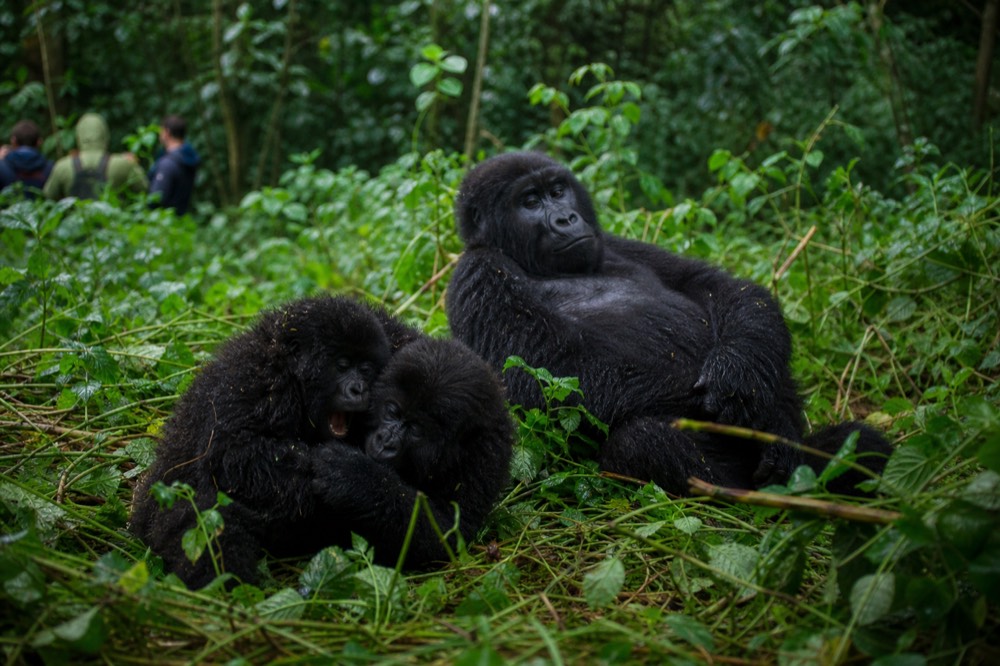
Anyone with limited time, anyone already acclimatised, and anyone whose budget stops near $1,900. The day trip delivers the identical hour with the identical family under the identical rules. Nothing about a package changes the gorillas, the group size of eight, or the sixty-minute limit.
This is the part worth saying clearly, because the whole page has been arguing for extra nights. Multi-day trips buy comfort and certainty. They do not buy a better wildlife encounter. The ranger allocates families at the 07:00 briefing without reference to what anyone paid, a $3,746 traveller and a $1,760 traveller can end up in the same group of eight, and both get one hour at seven metres.
The people who genuinely need the extra night are the ones arriving jet-lagged and the ones with an inflexible date in peak season. Everyone else is buying a nicer trip rather than a better one, which is a perfectly good reason as long as you know that is what you are doing. Related reading: hour-by-hour day trip guide.
One last practical note that affects both shapes. Whatever you book, buy or confirm the permit before the international flights. Eighty places a day is the hard ceiling, and the calendar decides the trip rather than the other way round. The full cost breakdown covers the smaller lines, tips, porters and gear, that turn a $1,839 plan into a $2,100 reality.
Frequently asked questions
Is there a 2-day gorilla trekking package in Rwanda?
A two-day trip can be assembled independently: a day trek at $260 to $360, one night near the park at $78.50 to $277.94, and your own $1,500 permit, landing between $1,839 and $2,138 per person. Confirm near-park pickup and the quote before booking; Ruhengeri pickup is explicitly listed for the permit-included Katona day.
Does the 3-day package include the gorilla permit?
Yes. The three-day safari from $3,746 includes one $1,500 permit per person, lodge accommodation, all meals and a private 4x4 for the full three days. Because the operator commits that permit money to the government in advance, the booking is non-refundable once confirmed, subject to the operator confirming the requested permit date.
Is a multi-day package worth it over a day trip?
It is worth it if you arrive on a long-haul flight the night before, or if you need a confirmed permit in peak season. It is not worth it for the wildlife: group size is capped at eight and viewing at one hour regardless of price. A day trek plus your own permit costs $1,760 to $1,860 against $3,746.
How far in advance should I book a multi-day trip?
For June to September or December to February, four to six months is sensible, because only 96 permits exist per day across twelve habituated families. For March to May, six to eight weeks is usually enough. Book the permit or the permit-included package first, then the international flights, never the other way round.
Where do you sleep on a 2-day or 3-day trip?
Most trips base in the Musanze and Kinigi area, twenty minutes to an hour from the park gate. Mid-range guesthouses and small lodges run $78.50 to $277.94 a night. The top tier is a different market entirely, with 2026 rates of $2,720 to $3,630 per person nightly at Singita Kwitonda and $2,869 to $3,795 at Wilderness Bisate.
Can I add golden monkey trekking to a multi-day trip?
Yes, and it is the strongest reason to take three days rather than two. Golden monkeys live in the bamboo zone of the same park, need their own permit, and require a separate morning. The flexible day listing offers a golden-monkey option or a gorilla option. Both permits are extra, and it does not include both primates on one morning.
Choose The Experience That Fits Your Trip
General starting point; dates, pickup and passenger acceptance still need confirmation.
Choose your pace: one organised day or a three-day stay · alternatives & optional controls
- Permit-Included Rwanda Gorilla Day — 13 hours. Gorilla permit and lunch in one booking; Kigali or Ruhengeri pickup. Gorilla Permit Fee included. English listed. Ages 15+, up to 100. Booked hotel in Kigali or Ruhengeri; confirm your return arrangements with the operator.
- Private Gorilla Trek From Kigali — 12 hours. Private transport, driver-guide and meals around the park trek. Gorilla permit purchased separately; operator offers assistance. English listed. Ages 15+, up to 85. Pickup and drop-off anywhere in Kigali.
Three-Day Rwanda Gorilla Safari
Once your arrival dates are firm, check the three-day itinerary and accommodation option before booking separate nights.
3 days. Lodge accommodation, meals, 4x4 transport and one gorilla permit per person. One gorilla tracking permit per person included. English listed. Ages 15+, up to 80. Kigali airport or hotel by arrangement; returns Kigali airport. Minimum two adults; lodge option must be confirmed.
Check dates & final price on Viator