What to Wear Gorilla Trekking: The Packing List That Survives the Mud
Nettles, greasy volcanic soil and a briefing field at 2,400 m decide this packing list. Fashion has no vote.
 By Eric Habimana, gorilla trekking guide since 2015
Short answer
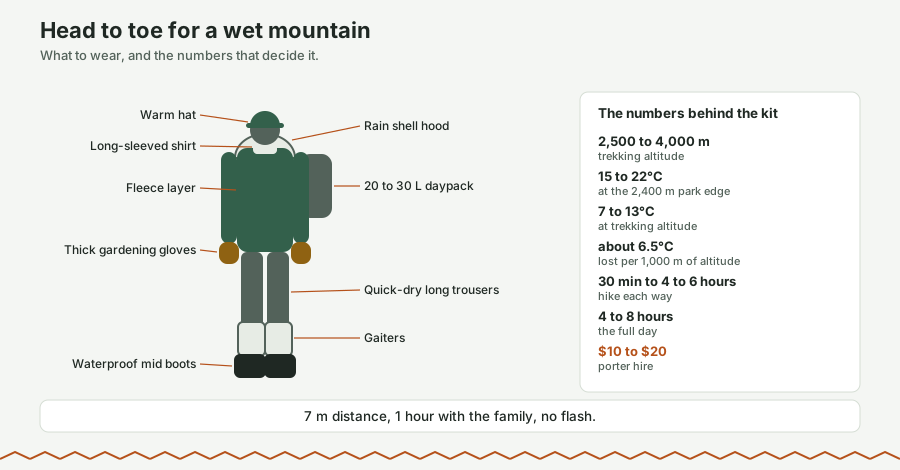
Waterproof mid-height boots with real tread, long trousers tucked into gaiters or socks, a long-sleeved top against stinging nettles, thick gardening gloves, a fleece for the 07:00 briefing and a rain shell in every month. Temperatures at 2,500 to 4,000 m often sit at 7 to 13°C while you climb through mud, and a porter at $10 to $20 carries the rest.
Nobody comes off this mountain clean. The soil in Volcanoes National Park is old volcanic ash that turns to a heavy grey-brown grease within an hour of rain, and rain is a year-round feature of a forest sitting between 2,500 and 4,000 m. Add stinging nettles at chest height, bamboo that whips back at whoever is behind you, and a briefing field that is genuinely cold at 07:00, and the packing list writes itself.
The good news is that it is a short list. This is a day hike, not an expedition, and most of what people overpack stays in the vehicle. What matters is that four or five items are the right items, because the wrong boots or bare forearms turn a great morning into a long, itchy, sliding one.
Your Booking Choice
Once your kit is ready, choose the transport and overnight format that fits it.
The private Kigali day trek covers the road journey and meals. Bring your own trekking clothes and arrange the gorilla permit separately.
What should you wear for a gorilla trek?
Waterproof boots with aggressive tread, long trousers you do not mind ruining, a long-sleeved shirt, thick gardening gloves, a fleece and a rain shell. Tuck trousers into socks or gaiters. The park sits at 2,500 to 4,000 m where 7 to 13°C is normal, so you dress for cold standing and heat climbing.
Every item on that list is solving a specific problem the forest creates. Boots handle the mud and the hidden holes under the vegetation. Long sleeves and trousers handle the nettles, which are the single most common complaint from people who trekked in shorts. Gloves handle the grab reflex when a foot slides. Layers handle a temperature swing that runs from a chilly standing start to a sweaty climb and back again inside four hours.
The park's own difficulty framing describes steep volcanic slopes, uneven and muddy terrain and dense vegetation including bamboo and nettles. That is not marketing language dressed up. It is the terrain, and your clothing is the interface with it.
One thing your clothing cannot fix: turning up sick. Rangers can refuse a trek to anyone with a visible cold or flu, because gorillas are highly susceptible to human respiratory infections. No jacket solves that, and no refund covers it either.
The head-to-toe kit list
Nine items carry this trek. Boots, socks, gaiters, long trousers, a base layer, a long-sleeved shirt, a fleece, a rain shell and gloves. Everything else is optional. The table below pairs each item with the specific hazard it exists to defeat, and with the substitute that fails.
| Item | What it solves | What fails instead |
|---|---|---|
| Waterproof mid boots, broken in | Mud, ankle holes, wet feet | New boots, trail runners, canvas shoes |
| Thick socks, one spare pair | Blisters, cold feet, wet descent | Thin cotton socks |
| Gaiters | Mud entering the boot, nettle stings at the ankle | Nothing, or trousers left loose |
| Long trousers, quick-dry | Nettles, thorns, bamboo whip | Shorts, jeans, leggings |
| Long-sleeved shirt | Forearm nettle stings, sun at altitude | T-shirt |
| Light base layer | Sweat management while climbing | Cotton, which stays wet |
| Fleece or light insulated layer | The cold standing hour at the briefing | Relying on the rain shell alone |
| Rain shell with hood | Rain in any month, wind at altitude | Poncho that catches on vegetation |
| Thick gardening gloves | Grabbing nettles and thorns when you slip | Thin liner gloves, bare hands |
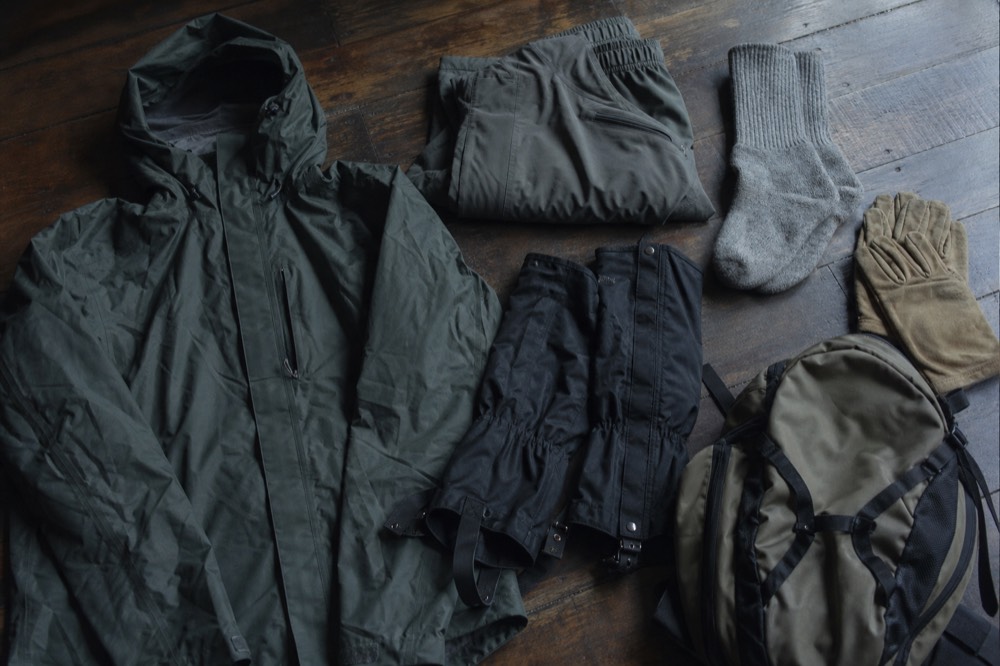
Notice what is missing from that list. No specialist mountaineering gear, no crampons, no technical shell costing four figures. The trek tops out well below the altitudes where equipment gets serious. It is the wetness and the vegetation that punish poor choices, not the mountain itself.
Boots: the one item worth getting right
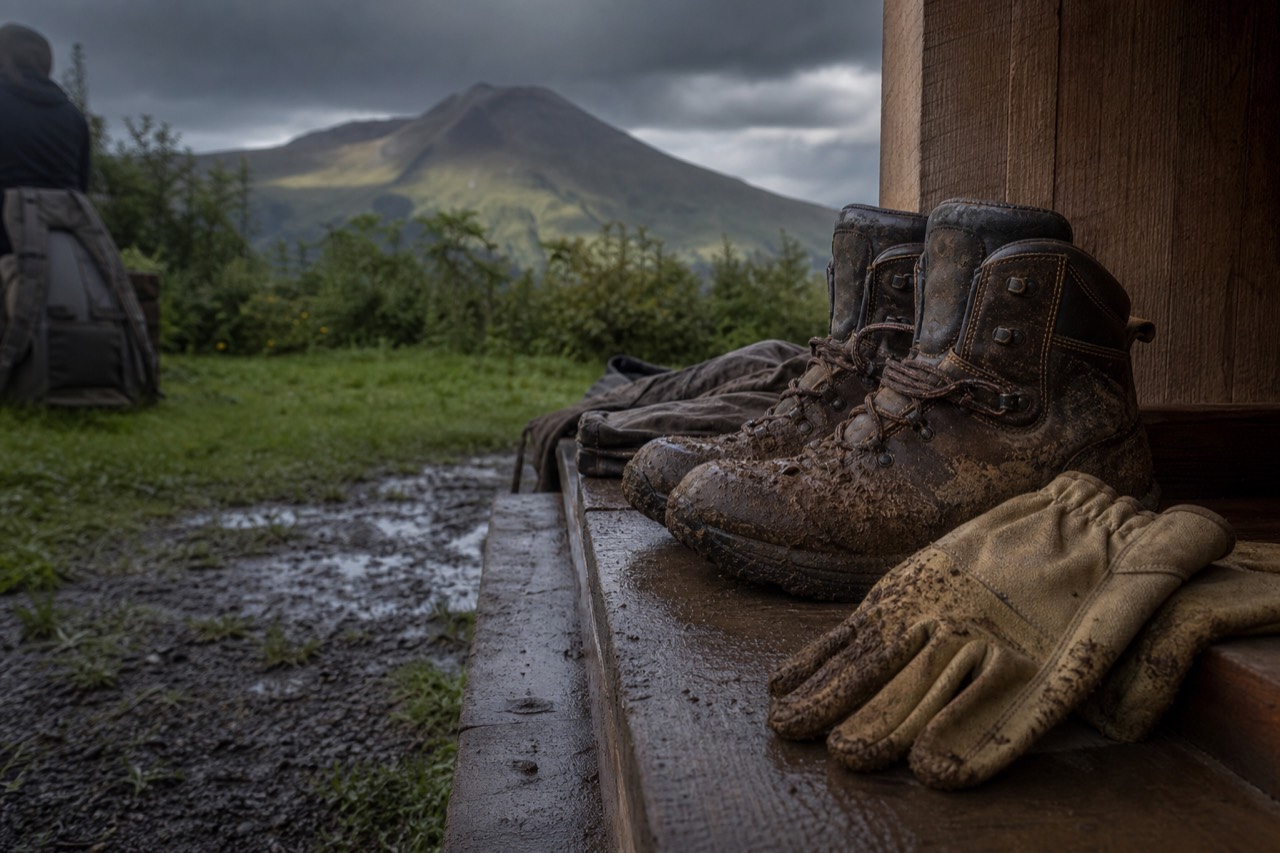
Bring waterproof, mid-height boots with deep lugs, already broken in. Volcanic mud fills tread and hides ankle-deep holes under a mat of vegetation, so grip and ankle support both earn their keep. Rubber gumboots are the local answer and work brilliantly in the wet, provided they fit over thick socks and do not rub.
The mistake people make is buying boots for the trip and wearing them for the first time at Kinigi. Four to six hours of climbing on uneven ground is a bad first date with new leather. If the boots are new, put fifty kilometres through them at home before you fly.
Mid-height matters more than most packing lists admit. The hazard here is not a dramatic twisted ankle on a rock field, it is the foot that goes sideways into a hidden gap between root and mud while the rest of you keeps moving. A cuff that holds the ankle turns that into a stumble rather than the end of the trek.
| Footwear | Grip in wet volcanic mud | Ankle support | Verdict |
|---|---|---|---|
| Broken-in waterproof mid boot | Very good | Good | The default choice |
| Rubber gumboots | Excellent | Moderate | Ideal in the wet if they fit properly |
| New leather boots, unworn | Good | Good | Blister risk outweighs the grip |
| Trail runners | Poor once clogged | None | Fine on a dry June day, risky otherwise |
| Trainers or canvas shoes | Very poor | None | Do not |
Wet-season trekkers should think hardest about this row order. In March, April or November the trail is at its greasiest, and the month-by-month timing guide sets out exactly which weeks that applies to.
Long trousers and long sleeves: the nettles decide this
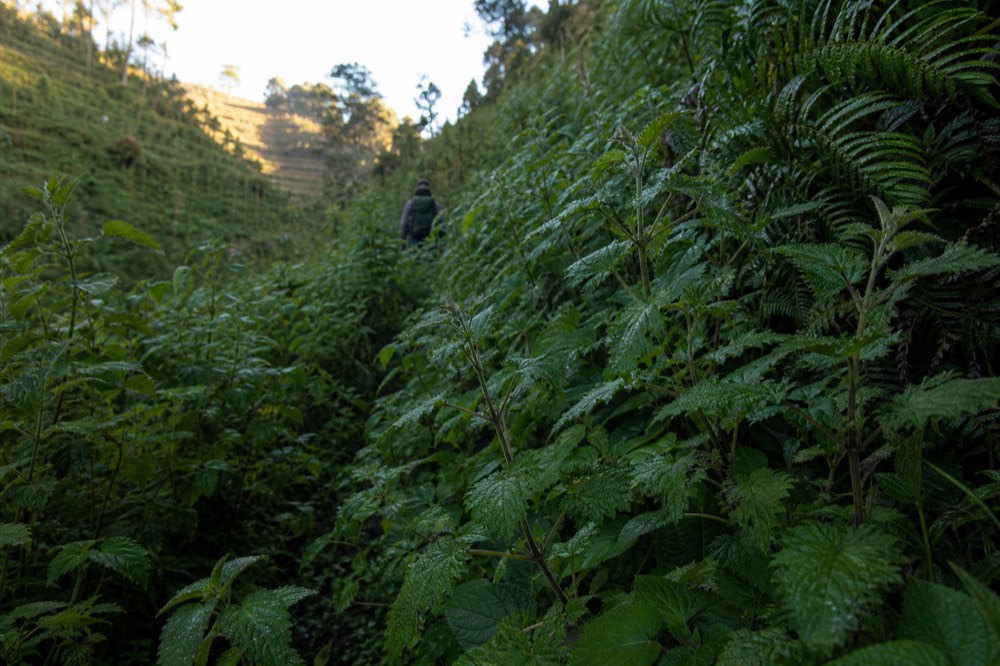
Cover your arms and legs regardless of temperature. The forest carries dense stinging nettles at hand and forearm height, and the trail is often cut through them by a ranger with a machete while you follow. Shorts and short sleeves are the most regretted packing decision on this mountain.
Nettle stings here are not dangerous, just persistent, and they land on exactly the parts of you that reach out for balance. The sting can sit on the skin for hours afterwards, which is a long time to be paying for saving 200 grams of fabric.
Quick-dry synthetic or light hiking trousers beat jeans by a distance. Denim absorbs mud and water, gets heavy, and stays heavy for the whole descent. Leggings and thin joggers stop nothing: nettles go straight through. Tuck the hems into socks or gaiters, which also keeps mud out of the boot.
A sun consideration sits on top of the nettle one. At 2,500 m and above, ultraviolet exposure is stronger than the mild air temperature suggests, so a long-sleeved shirt is doing double duty even on a grey morning.
Why gardening gloves beat hiking gloves
Buy cheap, thick canvas or rubber-palmed gardening gloves rather than technical hiking gloves. When your boot slips on wet volcanic soil, your hand goes out and lands on nettles, thorns or bamboo. Thin liner gloves transmit all of that. Gardening gloves stop it and cost a fraction as much.
This is the one item that surprises people who have hiked plenty elsewhere. On a normal mountain, gloves are about warmth. Here they are about what your palms touch, and the palms touch a great deal, because the technique on steep muddy sections is genuinely hands-on.
Choose a pair with a coated palm if you can find one, since bare canvas soaks through and then does nothing. Size them slightly large so they can go on and off easily with wet hands, and accept that they will not come home the same colour.
The 07:00 briefing is cold, the climb is not
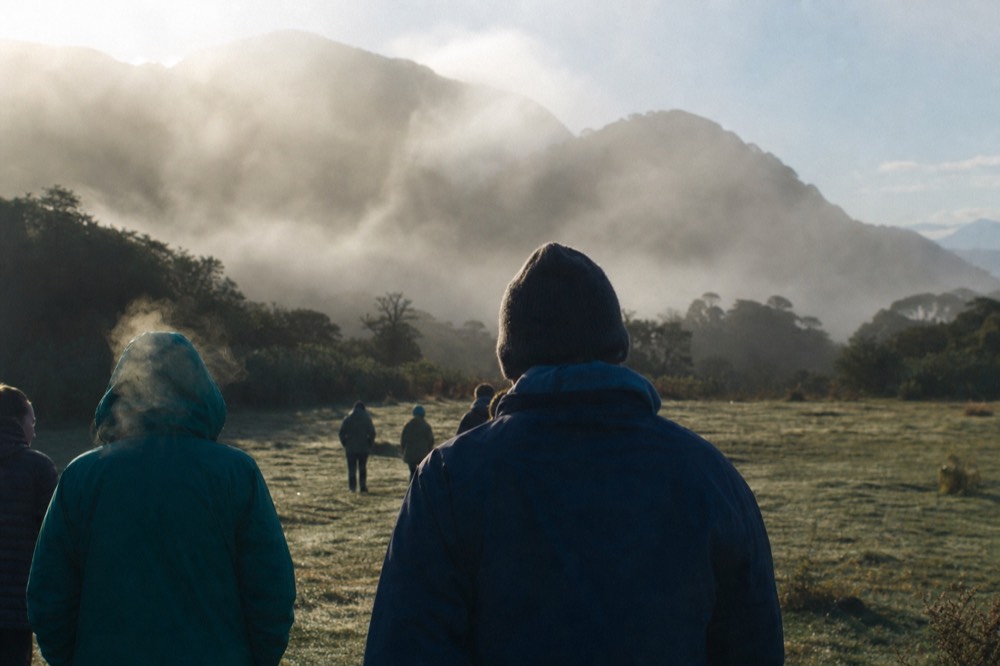
Temperatures around the park edge at 2,400 m usually sit between 15 and 22°C by day and fall about 6.5°C for every 1,000 m of climb, so 7 to 13°C is common at trekking altitude. Standing still at the 07:00 Kinigi briefing is the coldest part of the day. Climbing in the same clothes is the hottest.
That swing is the whole layering argument, and it is why a single warm jacket is worse than three thinner things. The sequence that works: base layer next to skin, long-sleeved shirt over it, fleece for the briefing and the drive, rain shell in the pack until it is needed.
| Layer | Job | On for | In the pack for |
|---|---|---|---|
| Light base layer | Moves sweat off the skin | The whole day | Never |
| Long-sleeved trekking shirt | Nettle and sun cover | The whole day | Never |
| Fleece or light insulation | Warmth when standing still | Briefing, drive, the hour with the gorillas | The climb itself |
| Rain shell | Rain and wind, any month | Whenever the sky opens | Most of a July morning |
| Warm hat and buff | The cold standing start | Briefing, exposed ridges | Midday |
The counter-intuitive part is the hour with the gorillas. You will arrive hot from the climb, then stand almost motionless for sixty minutes at altitude, often in damp clothing. That is when the fleece goes back on, and people who left it in the vehicle spend the best hour of their trip shivering through it.
What goes in the daypack
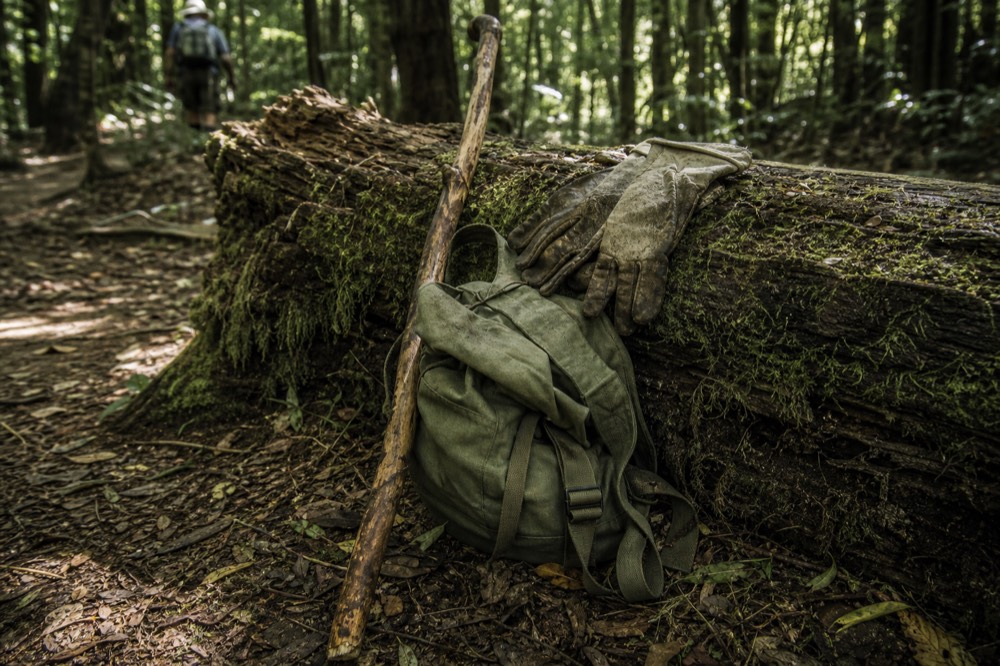
Two to three litres of water, snacks, a rain shell, the fleece, a dry bag or waterproof sleeve for the camera, sunscreen, insect repellent, a small first-aid kit and any medication. Keep it light: whatever is in the pack, you carry it up 500 vertical metres, or you pay a porter to.
The pack itself should be 20 to 30 litres with a chest strap. Anything bigger tempts you into filling it. Anything smaller cannot hold a shed fleece plus a shell plus water, which is exactly the combination you need after the first climb.
| In the pack | Why | Skip it if |
|---|---|---|
| 2-3 L water | Altitude and effort dehydrate faster than the cool air suggests | Never skip |
| Snacks or a packed lunch | Full days run 4 to 8 hours from briefing to return | Your tour includes lunch, but carry something anyway |
| Rain shell | Rain lands in every month here | Never skip |
| Dry sleeve for the camera | Forest damp gets into everything | You are shooting on a phone in a case |
| Sunscreen | UV at 2,500 m plus is stronger than it feels | Never skip |
| Insect repellent | Malaria risk exists country-wide per health guidance | Never skip |
| Small first-aid kit, blister plasters | Long descents on wet ground | Your guide carries one, but plasters are personal |
| Face mask | Masks are worn during the hour with the gorillas | The operator supplies them, carry a spare regardless |
| Cash for the porter | $10 to $20 hire, tip on top | Never skip |
The mask line deserves attention because it is newer than most packing lists. Masks are now standard practice during the viewing hour, provided or required by operators, because gorillas share so much of our DNA that a human respiratory bug is a serious risk to a family. The rules the rangers actually read out are set out in full on the Rwanda Development Board's trekking page.
Health guidance is worth reading before you pack the repellent, since the CDC recommends antimalarial prophylaxis for travellers across Rwanda, high ground included. Their Rwanda traveller page is the primary reference.
Porters at $10 to $20: the best money on the mountain
A porter costs roughly $10 to $20 for the trek, carries your daypack, and hauls you up the slippery sections by the hand when the ground gives way. Almost everyone who hires one says afterwards that it was the difference between enduring the climb and enjoying it, and the money goes to people living beside the park.
There is a conservation argument layered on the practical one. Porter work is one of the direct routes by which trekking money reaches households in the villages around Kinigi, which is part of what keeps the park valued locally rather than resented.
Hire one even if you are fit. The pack weight is the least of it. What a porter really provides is a second point of contact on ground where a single misstep ends in a sit-down, and a hand at the top of a bank you would otherwise be crawling up. Bring the cash in small dollar bills, and add a tip on top of the hire fee.
Camera rules: no flash, and what that means
Photography is allowed and flash photography is not. That rule is absolute, and it lands you in a dim forest under closed canopy trying to shoot a dark-furred animal. Fast glass, a high ISO tolerance and a rain sleeve matter far more than reach, because you are already within 7 m.
Think about that distance for a moment. Seven metres is the minimum the rules require you to keep, so a long telephoto is often the wrong lens entirely. A 24-70 equivalent or a decent phone camera handles most of what you will see, and a wider frame catches the vegetation the family is sitting in, which is the part that makes the picture read as the Virungas rather than as a zoo.
Practical constraints that photographers underestimate: your hands will be muddy, your lens will fog moving between cold air and body heat, and the hour goes faster than anyone expects. Bring a lens cloth, keep the camera in the dry bag until you arrive, and accept that no rapid movements is also a photography rule, not just a behaviour rule.
| Rule at the encounter | The number | What it means for your kit |
|---|---|---|
| No flash photography | Absolute | Fast lens or high ISO, no external flash |
| Keep 7 m distance | About 22 ft | Wide or standard lens beats a long telephoto |
| One hour with the family | 60 minutes | Change settings before you arrive, not there |
| No rapid movements | Absolute | Camera out slowly, no lens swaps mid-encounter |
| Keep voices low | Absolute | Turn off shutter beeps and phone alerts |
| Do not litter | Absolute | Everything you carry in comes back out |
| No trekking while sick | Enforced at briefing | Nothing in your bag overrides this |
The behaviour side of these rules gets its own piece, including the one that catches everybody out: our explainer on why guides tell you not to smile covers what a bared-teeth expression communicates to a gorilla.
Can you wear blue in Rwanda?
No clothing-colour rule is published for gorilla trekking at Volcanoes National Park. The Rwanda Development Board's trekking guidelines cover distance, group size, flash photography, illness, noise and litter, and say nothing at all about the colour of your clothes. Neutral and earth tones are what operators suggest, for camouflage and mud, not for compliance.
Ask where the question comes from and you will usually be pointed at savannah safari packing advice, where insect avoidance drives colour choices in tsetse-fly country. Volcanoes National Park is montane rainforest above 2,500 m, a different environment with different guidance, and the park's published rules simply do not address it.
So the practical answer: wear whatever earth-toned, hard-wearing clothing you already own. Greens, browns, khaki and grey all disappear into the forest and hide mud better than pale colours do. Bright white is a poor idea for the same reason it is a poor idea on any muddy hike. Blue, if that is what your rain shell happens to be, is not going to end your trek.
What to leave behind
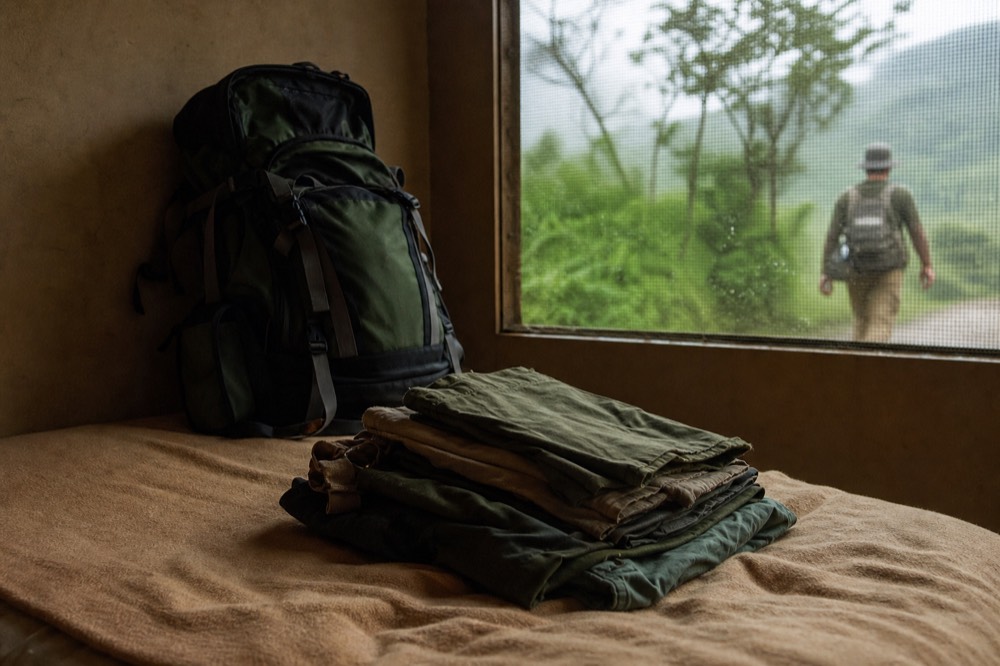
Leave the flash unit, the drone, the jeans, the brand-new boots and the oversized camera bag. Anything that makes noise, anything you cannot carry uphill for four hours, and anything that generates wrappers you would have to pack back out. The forest has a strict no-litter rule and no bins.
There is a quieter category too: the stuff people bring because a packing list on another site told them to. Water purification tablets are unnecessary on a guided day trek with supplied water. A full camping kit is for a different trip. Heavy binoculars mostly stay in the bag, since 7 m is close enough to see everything without them.
| Leave it | Why |
|---|---|
| External flash | Flash photography is banned at the encounter |
| Jeans | Soak up mud and water, stay heavy all day |
| New unworn boots | Blisters over four to six hours of climbing |
| Large camera bag without a porter | Weight at altitude with no free hands |
| Noisy gear, alarms, drones | Rules require low voices and no rapid movements |
| Single-use wrappers you cannot repack | No litter is an enforced rule, and there are no bins |
| Cotton hoodies | Hold sweat, then hold cold |
Dry season versus wet season packing
The core list does not change, the emphasis does. In June to September and December to February you can get away with lighter boots and less mud management. In March to May and October to November, gaiters, gloves, a second pair of socks and a genuinely waterproof shell shift from useful to necessary.
Wet-month trekkers should also pack a full change of clothes to leave in the vehicle. The drive back to Kigali is around 90 minutes from Musanze plus the run down from Kinigi, and doing it in soaked trousers is a poor end to the day.
| Item | Dry season (Jun-Sep, Dec-Feb) | Wet season (Mar-May, Oct-Nov) |
|---|---|---|
| Gaiters | Useful | Necessary |
| Gardening gloves | Necessary | Necessary, bring a spare |
| Rain shell | In the pack, often unused | On and off all day |
| Spare socks | Nice to have | Necessary |
| Change of clothes in the vehicle | Optional | Necessary |
| Porter | Recommended | Effectively essential |
| Waterproofing for the camera | Sensible | Necessary |
Which trek makes the kit easier?
Formats differ in how much of the logistics they absorb, not in what you wear. A day trek from Kigali means an early pickup and a long vehicle day in your trekking clothes. A multi-day package includes overnight accommodation; check the itinerary before deciding how much spare clothing to pack.
For anyone still weighing formats, the full trek lineup sets the six options side by side, and the cost breakdown explains where the permit sits in each one. If the physical side is your worry rather than the kit, the honest difficulty guide is the one to read next, and the permit walkthrough covers the booking half.
The final check before the 4:30am pickup
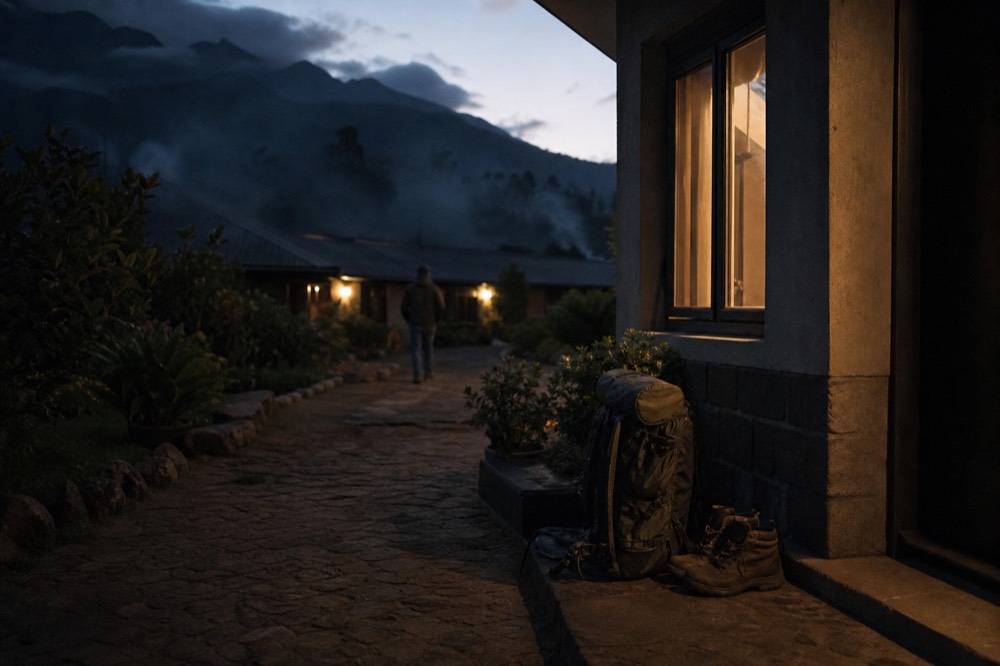
Boots by the door, gloves in the pack, fleece on the chair, rain shell rolled, water filled, cash for the porter in a pocket that closes. Then the one that has nothing to do with clothing: if you have woken up with a cold, you are not trekking, and the rules are explicit about it.
Set out the kit the night before, because a 4:30am departure from a Kigali hotel does not forgive a search for a missing sock. Charge camera batteries overnight, and bring a spare if you use one; charging facilities depend on the booked vehicle.
One last practical note on documents. Your permit is tied to your passport details, so the passport travels with you to the briefing, not in the hotel safe. Everything else on this list is replaceable. That is not.
Common gear questions
What should I wear for gorilla trekking in Rwanda?
Waterproof broken-in boots, long quick-dry trousers tucked into gaiters or socks, a long-sleeved shirt, a light base layer, a fleece and a rain shell. Add thick gardening gloves for the nettles. Temperatures at 2,500 to 4,000 m often sit at 7 to 13°C while the 2,400 m park edge runs 15 to 22°C, so you dress in layers rather than in one warm jacket.
Can you wear blue in Rwanda?
There is no published clothing-colour rule for gorilla trekking. The Rwanda Development Board's guidelines cover the 7 m distance, group size, flash photography, illness, noise and litter, and say nothing about colour. Operators suggest neutral and earth tones because they blend into forest and hide mud. Blue is not banned at Volcanoes National Park.
Do I need gaiters for gorilla trekking?
In the wet months, yes. Gaiters keep volcanic mud out of the boot and stop nettles reaching your ankles, and March to May and October to November are when that matters most. In the dry season, tucking long trousers firmly into thick socks does most of the same job, but gaiters cost little and weigh almost nothing.
Should I hire a porter?
Yes, even if you are fit. Porters cost roughly $10 to $20 for the trek plus a tip, carry your daypack and steady you on greasy slopes where a single slip ends in a fall. The work also puts trekking income directly into the villages around the park. Bring the fee in small dollar bills.
Can I take photos of the gorillas?
Yes, without flash. Flash photography is prohibited under the park's rules, along with rapid movements and raised voices. You stay 7 m from the family for one hour, so a standard or wide lens usually works better than a long telephoto. Bring a dry sleeve, because forest damp and mud reach everything you carry.
What should I not bring on a gorilla trek?
Leave the external flash, drones, jeans, brand-new boots and any camera bag you cannot carry uphill for four hours. Avoid noisy gear and anything producing wrappers, since the no-litter rule is enforced and there are no bins in the park. Cotton hoodies hold sweat then hold cold, so leave those too.
Choose The Experience That Fits Your Trip
General starting point; dates, pickup and passenger acceptance still need confirmation.
Choose a day trip or overnight safari · alternatives & optional controls
- Kigali Gorilla Tracking Day — 1 day. Kigali pickup, driver-guide, lunch and water; gorilla permit extra. Gorilla permit excluded. English listed. Ages 15+. Kigali city/hotel or Kigali airport; returns Kigali.
- Three-Day Rwanda Gorilla Safari — 3 days. Lodge accommodation, meals, 4x4 transport and one gorilla permit per person. One gorilla tracking permit per person included. English listed. Ages 15+, up to 80. Kigali airport or hotel by arrangement; returns Kigali airport. Minimum two adults; lodge option must be confirmed.
Private Gorilla Trek From Kigali
Before packing the final bag, check your departure date and pickup details for the trek.
12 hours. Private transport, driver-guide and meals around the park trek. Gorilla permit purchased separately; operator offers assistance. English listed. Ages 15+, up to 85. Pickup and drop-off anywhere in Kigali.
Check dates & final price on Viator