Is It Okay to Smile at a Gorilla?
Guides tell every group not to bare their teeth at a mountain gorilla. Here is the reasoning behind that briefing, plus the park rules that go with it.
 By Eric Habimana, gorilla trekking guide since 2015
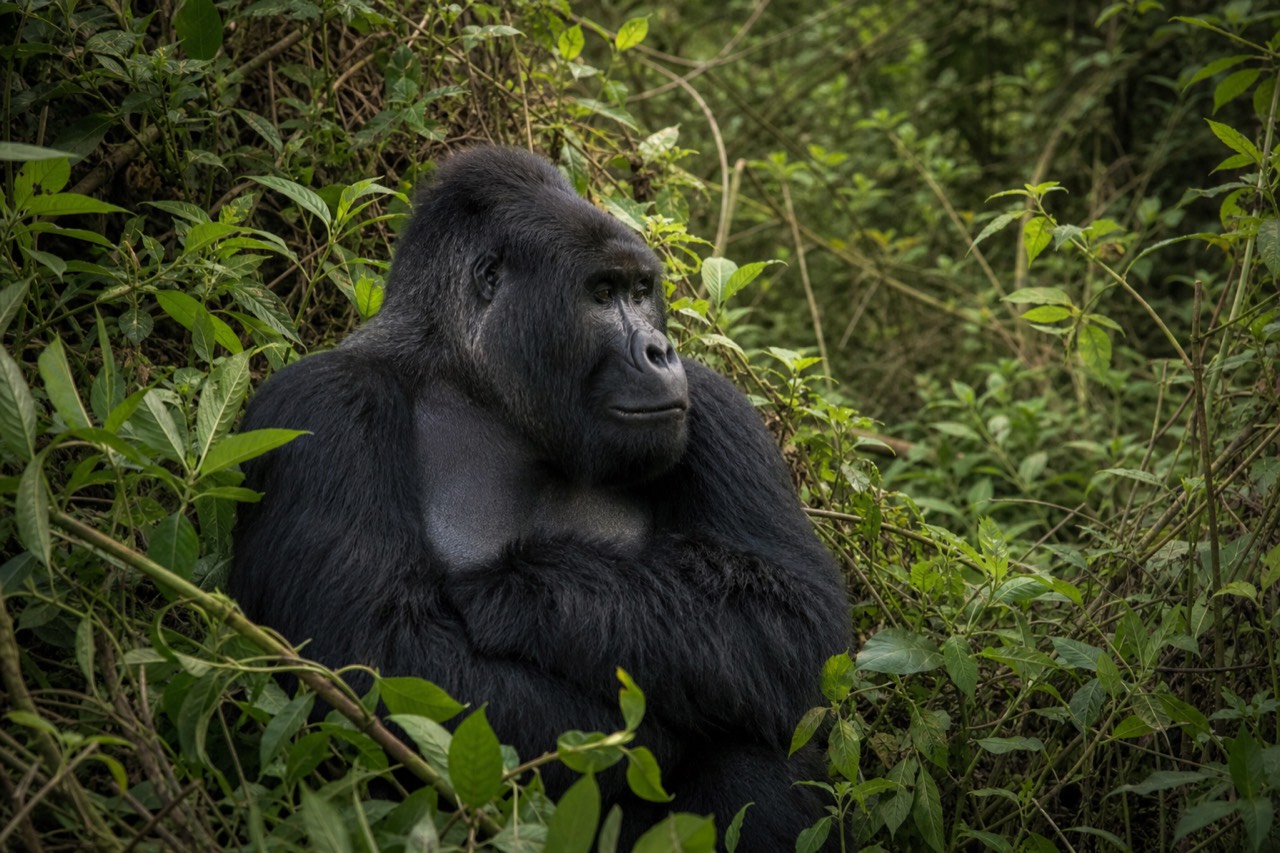
Somebody in every group does it. A young gorilla rolls onto its back in the vegetation, the whole party melts, and two sets of primate instinct meet. You grin. The ranger, without raising his voice, tells you to stop.
Is it okay to smile at a gorilla?
A closed-mouth smile is fine. Showing your teeth is what guides ask you not to do. Rangers brief every group at Volcanoes National Park to avoid wide, open-mouthed grins, because a display of bared teeth does not read as friendliness among gorillas. Keep the expression soft, the movements slow, the voice low, and the 7 m distance intact.
Your Booking Choice
For the encounter behind the etiquette, explore a private gorilla trekking day from Kigali with meals and transport arranged.
The private day includes Kigali pickup and meals; the gorilla permit is separate, and every visitor follows the park briefing.
The nuance matters, because the question usually arrives in a form that leaves people afraid to have a face at all. Nobody is asking you to look grim for an hour. What rangers warn against is the big theatrical grin with the lips pulled right back.
Watch a properly briefed group and you notice something else: they go quiet. Not silent, quiet. That, more than any expression, keeps an encounter calm.
What a bared-teeth face is said to mean
Guides explain it this way: among gorillas, an open mouth with the teeth on show belongs to the vocabulary of display and challenge rather than to friendliness. A human grin can therefore be read as tension coming from you. Follow the ranger’s briefing throughout the encounter; a facial expression is not a guarantee of how an animal will respond.
The wider safety record behind that caution is laid out in has anyone ever been injured on a gorilla trek, for the practical demands and limits of the available information.
Primatologists describe teeth-baring in great apes as part of a signalling repertoire tied to arousal and threat, and park guidance in the Virungas reflects that reading. The operating principle is simpler still: give the animals nothing to interpret.
That principle explains almost every other rule too. No rapid movements, because sudden motion is information. Voices low, because volume is information. Seven metres, because proximity is information. You are a visitor in a habituated family's living room for exactly one hour, and the ideal version of you is boring.
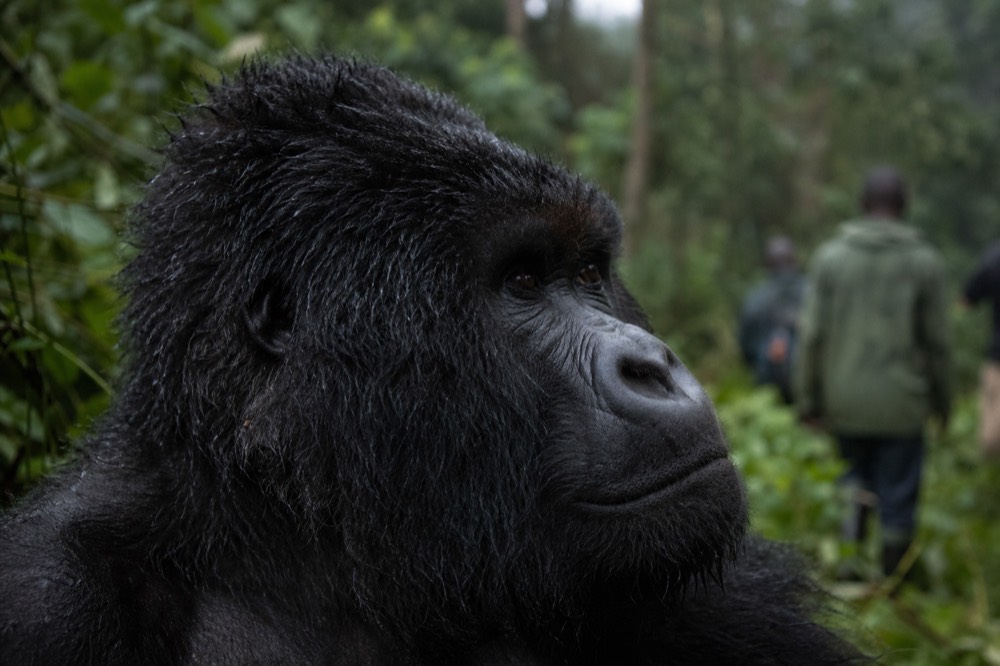
The rules the rangers actually read out
The Rwanda Development Board publishes the guidelines every visitor hears at the 07:00 briefing in Kinigi. Stay 7 m back, one hour maximum, no more than 8 visitors per family, no flash photography, keep voices low, no rapid movements, cover coughs and turn away, no spitting, no litter, and no trekking at all while sick.
| Rule | The specific | Why it exists |
|---|---|---|
| Distance | 7 m, about 22 ft | Reduces disease transmission both ways |
| Time | 1 hour with the family | Limits stress on the gorillas |
| Group size | 8 visitors maximum per family | Keeps the encounter small and controlled |
| Photography | Permitted, never with flash | Flash startles the animals |
| Voices | Kept low throughout | Volume reads as agitation |
| Movement | No rapid movements | Sudden motion provokes a response |
| Coughing | Cover it and turn away | Gorillas catch human respiratory infections |
| Illness | No trekking while visibly sick | Access can be refused at the briefing |
| Litter | Nothing left behind | No bins, no exceptions |
Those are published rules rather than folklore, and you can read them in full on the park's own trekking page. Face masks during the viewing hour have become standard on top of them, for the same respiratory reason, and the tourism board's gorilla tracking overview sets out the wider experience.
What if a gorilla comes toward you?
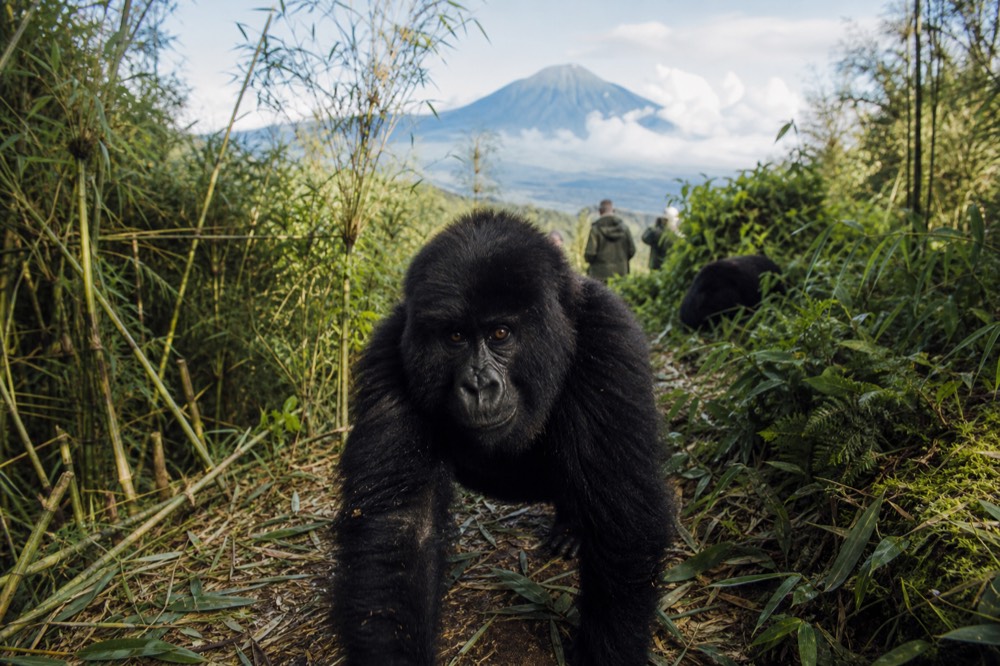
Stay still, lower your eyes, and do what the ranger says. The 7 m rule is a rule for you, not for them, and habituated gorillas do close that gap, especially juveniles. Do not run, do not back away suddenly, and do not reach out. Let the ranger direct any repositioning.
Curiosity is common in habituated families. A youngster may wander over to look at the strange upright creatures, and occasionally brush past a leg on the way through. The correct response is almost nothing: crouch if the ranger indicates it, look at the ground, keep the camera down.
Avoid sudden movements and follow the ranger’s directions. Sudden retreat is exactly the rapid movement the guidelines warn about, and it turns a benign moment into a startling one. Your rangers know these particular families individually, by name and temperament, and their instruction beats anything you read here.
The rule that starts before you leave your hotel
If you wake up with a cold or flu on trek morning, you are not going. Rangers can and do refuse access to visibly sick visitors, because gorillas share so much of our DNA that a human respiratory infection can spread through an entire family. This applies whatever you paid for the $1,500 permit.
That is the hardest rule on the list and the most important one. It is also why masks are worn during the hour, and why a coughing instruction sits in a document otherwise concerned with distance and cameras.
The practical version: build a buffer into your trip, treat any developing cold seriously, and remember that the minimum age of 15 is equally non-negotiable. Preparation on the gear side is covered in our packing list for the mud, and the physical side in the honest difficulty guide.
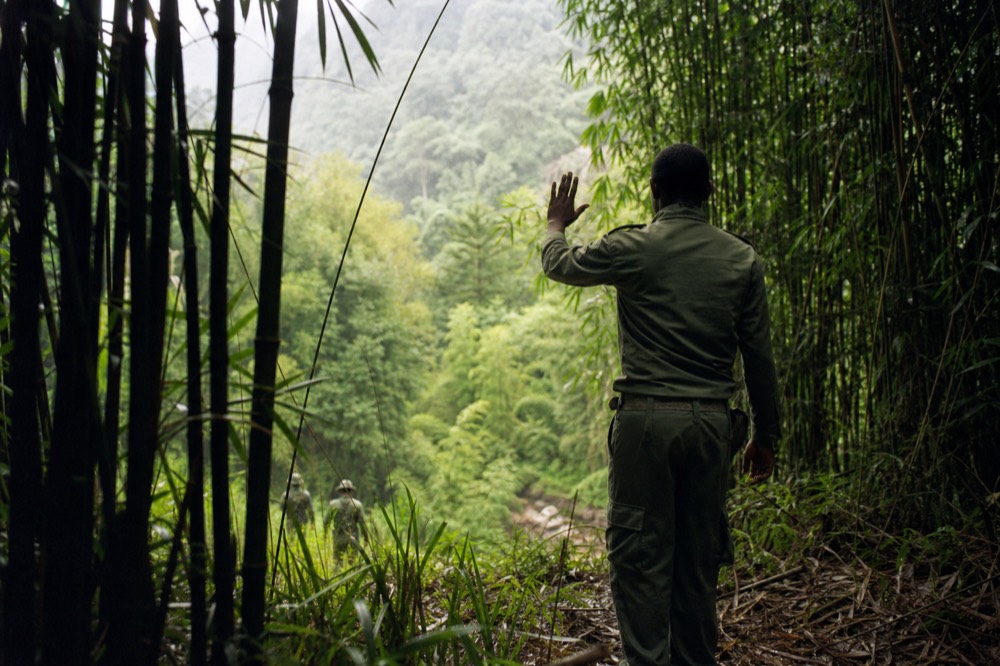
The full trek lineup shows which formats include that permit and which leave it to you, and the month-by-month timing guide covers when dates get scarce.
Common questions about gorilla etiquette
Is it okay to smile at a gorilla?
Keep it closed-mouth. Guides at Volcanoes National Park brief visitors not to bare their teeth, because an open-mouthed display of teeth does not signal friendliness among gorillas and can read as tension. A soft, quiet expression is fine. The rules that go with it are 7 m of distance, low voices, no rapid movements and no flash.
What should you not do around gorillas?
Do not run, point, shout, use flash, eat in front of them, spit, litter or make sudden movements. Do not trek at all if you are sick with a cold or flu, since rangers can refuse access. Keep 7 m of distance for the full hour, and follow the ranger's instruction immediately if a gorilla moves toward your group.
What happens if a gorilla touches you?
It happens occasionally with curious juveniles, and the answer is to stay still. Do not reach back, do not retreat quickly, and look toward the ground rather than into the animal's eyes. Your ranger will direct the group if repositioning is needed, and the 7 m rule resumes as soon as it moves on.
Why do you have to stay 7 metres from gorillas?
Distance reduces the risk of disease passing in either direction, and gorillas are highly vulnerable to human respiratory infections. Seven metres, roughly 22 feet, is the published minimum in the Rwanda Development Board's trekking guidelines, alongside the one-hour limit and the cap of 8 visitors per gorilla family. Masks during the viewing hour serve the same purpose.
Can you make eye contact with a gorilla?
Brief, soft glances are unavoidable and unremarkable. Prolonged direct staring is what guides advise against, for the same reason they advise against baring teeth: among gorillas it belongs to the language of challenge rather than greeting. If an animal approaches, rangers ask visitors to look down and stay still until it moves on.
Choose The Experience That Fits Your Trip
General starting point; dates, pickup and passenger acceptance still need confirmation.
Choose a separate-permit or permit-included gorilla day · alternatives & optional controls
- Permit-Included Rwanda Gorilla Day — 13 hours. Gorilla permit and lunch in one booking; Kigali or Ruhengeri pickup. Gorilla Permit Fee included. English listed. Ages 15+, up to 100. Booked hotel in Kigali or Ruhengeri; confirm your return arrangements with the operator.
- Kigali Gorilla Tracking Day — 1 day. Kigali pickup, driver-guide, lunch and water; gorilla permit extra. Gorilla permit excluded. English listed. Ages 15+. Kigali city/hotel or Kigali airport; returns Kigali.
Private Gorilla Trek From Kigali
Planning your forest encounter? Check the trek date and permit arrangements before scheduling the rest of your Kigali stay.
12 hours. Private transport, driver-guide and meals around the park trek. Gorilla permit purchased separately; operator offers assistance. English listed. Ages 15+, up to 85. Pickup and drop-off anywhere in Kigali.
Check dates & final price on Viator